
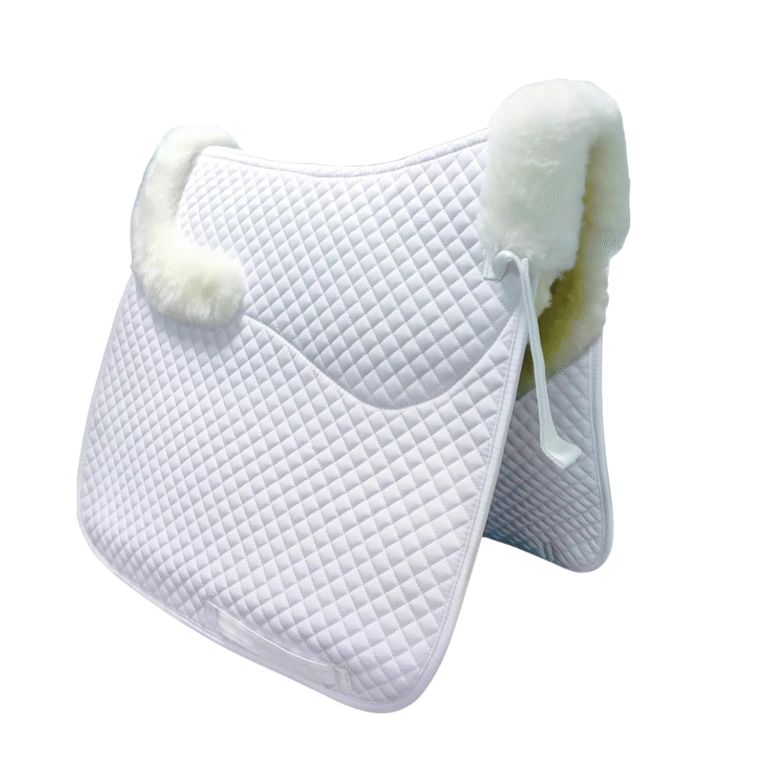
A dressage saddle pad is a straight-cut, longer pad shaped to sit under a dressage saddle: a long, straight flap line, a defined spine with wither clearance, and billet straps that hold it in place. For a tack shop or distributor, the buying question is not whether dressage pads sell — they do, to one of the most consistent customer groups in the sport — but which shapes, colours, and builds your riders actually need. Stock the straight dressage shape in white for competition, add the colours your schooling customers ask for, and check the spine, the straps, and the stitching on every sample before you order.
Key takeaways
- Dressage pads are straight-cut and longer than all-purpose pads, with a spine shaped for wither clearance.
- White is the competition staple; colours and sheepskin trim sell mainly for schooling and training.
- Check the current competition rulebook before stocking bold colours or large logos for affiliated riders.
- Billet straps, spine reinforcement, and even quilting decide whether a pad stays in place through a test.
- Order colourways against the 50 pieces per color minimum, and approve paid samples before the bulk run.
Shape and fit: dressage versus all-purpose
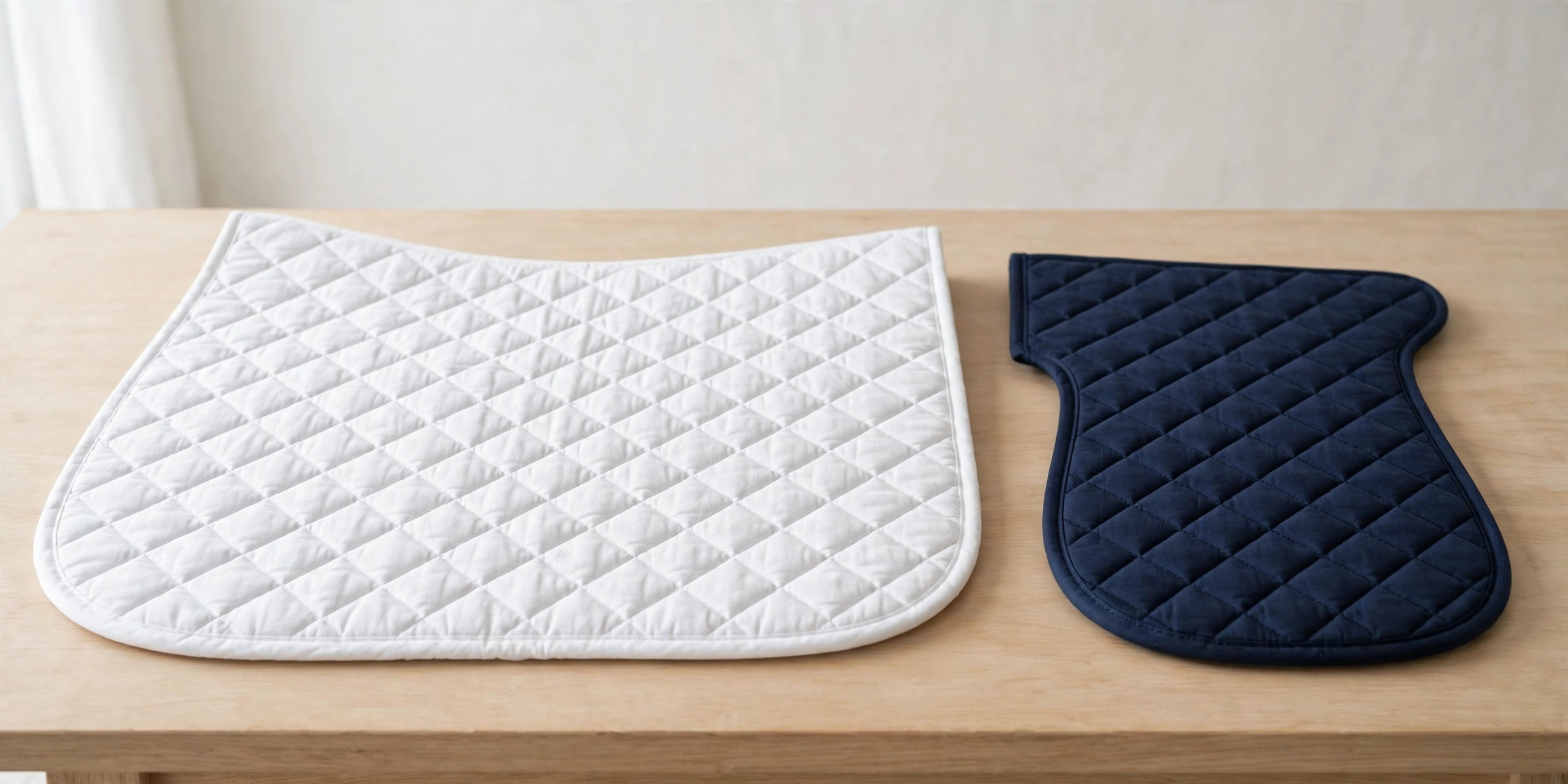
The difference between a dressage pad and an all-purpose pad is visible the moment you lay them side by side. A dressage pad is longer and straighter, following the long, straight flap of a dressage saddle, with a deeper drop that keeps the saddle clear of the rider’s leg. An all-purpose pad is shorter and more forward-cut, shaped for a jumping saddle. Within the dressage shape, the details matter. The spine should be shaped or cut to clear the withers rather than pressing on them, and the pad should sit high enough over the withers when first placed that it does not pull down onto the spine once the saddle is girthed. The billet straps — usually two or three — should line up with the saddle’s billets so the pad cannot slide back, Our comparison of dressage pads versus all-purpose pads lays out these differences with illustrations.
Competition rules to know before you stock
Dressage is a ruled sport, and the riders who buy your white pads are often the ones who care most about the rulebook. The FEI tack and equipment requirements set out what is permitted in the dressage test, and they are the right starting point for any shop that sells to affiliated riders — The practical point is restraint: competition saddlecloths are expected to be plain and conservative, and large logos or bright colours that suit schooling can fall foul of the rules in the arena. That does not mean you should only stock plain white — schooling customers are your volume, and they buy colour — but it does mean you should know which of your pads are competition-safe and say so on the ticket. When a customer asks whether a pad is legal for their level, the honest answer is to check the current rulebook for their federation and level, because rules are revised and a pad that was acceptable last season may not be this one.
Materials and build: what holds up in daily work
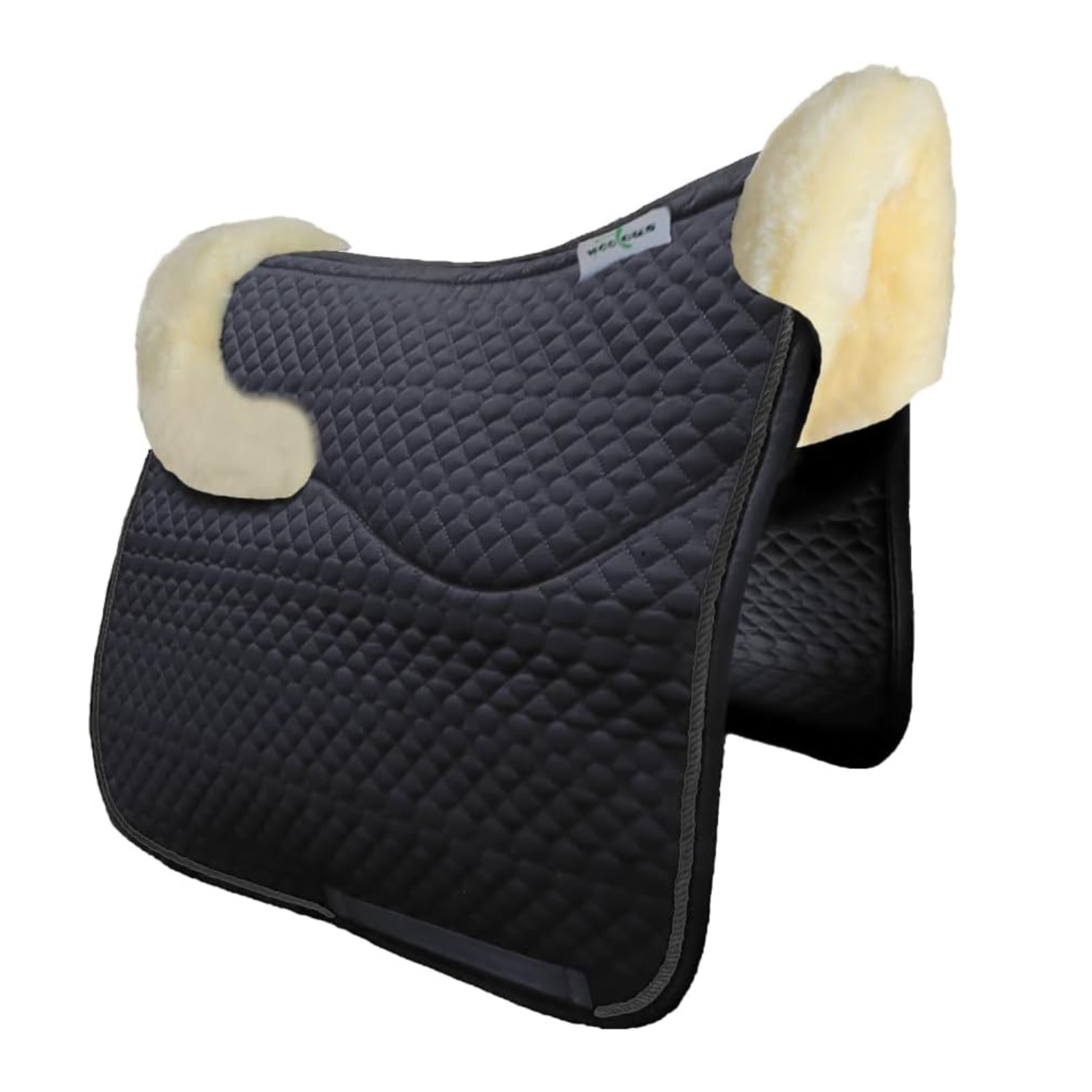
Most dressage pads are quilted cotton or poly-cotton on the face, with a lining that sits against the horse and a filling that gives the pad its body. The quilting pattern — diamond, channel, or square — is not only a look: it holds the filling in place so the pad does not go lumpy after washing, and even, regular quilting is a sign of a careful maker. Look at the spine, where the pad takes the most stress: reinforcement there helps the pad keep its shape after washing. Sheepskin trim is a popular upgrade on dressage pads, usually around the edge or along the spine, and it adds both a softer contact and a more expensive look — our white sheepskin dressage pads are an example of how that trim changes the character of an otherwise plain pad. Check the trim as you would any sheepskin: dense, even wool, a supple backing, and close, regular stitching. Binding around the edge should be neat and catch the full thickness of the pad; a binding stitched through only the top layer will lift and fray. The dressage pads range shows the shapes and trims available, and the sheepskin half pads guide is useful background for customers who want to pair a dressage pad with a half pad underneath.
Sizing across the range
Dressage pads are usually sold in pony, cob, and full, sometimes with a separate size for larger warmblood types, and the size names are not consistent between suppliers — one maker’s full can be another’s cob. That is why a sizing chart matters more than a size label: measure the pad’s length along the spine and its depth from the spine to the bottom edge, and compare those figures with the saddles your customers ride in, rather than trusting the ticket alone. Our saddle pad sizing charts for dressage, jumping, all-purpose, and western give the dimensions tack shops stock, and they are worth keeping behind the counter for the customer who arrives with a saddle and no idea which pad fits it. Two points deserve emphasis: the pad should be long enough that the saddle sits fully on it with a margin all round, and it should be placed high over the withers and allowed to settle, so it clears the spine rather than pressing on it. If you also stock half pads, note the combination should still clear the withers, so a customer buying both should try them together.
Stocking for dressage riders
A dressage range works best as a small, disciplined core with a few colour accents, not as a wall of lookalike pads. Start with white in the sizes you sell, then add black and navy for schooling, and seasonal colours only if customers ask for them by name. Keep the trim options simple: plain quilted for the base, sheepskin trim for the premium tier, and a matching half pad for the customer who wants the set. Our minimum is 50 pieces per color, so a colourway has to earn its place; a shade that sells two pads a year is not a colourway, it is a storage problem. Samples are paid, and they are worth ordering for every new shape or trim, because the quilting, binding, and strap placement cannot be judged from a photograph. When the bulk order arrives, check the pads against the approved sample — white consistency, spine shape, strap positions — and set aside anything that differs.
FAQ
What makes a saddle pad a dressage pad?
The shape: a dressage pad is longer and straighter than an all-purpose pad, with a deep drop to suit a dressage saddle’s long, straight flap, plus a spine shaped for wither clearance and billet straps that match the saddle.
Can riders compete in a coloured dressage pad?
It depends on the federation and the level. Competition saddlecloths are generally expected to be plain and conservative in colour, so white is the safe choice for affiliated tests. Check the current rulebook for the rider’s federation and level before advising them.
Should a dressage pad be used with a half pad?
Often, yes — many dressage riders layer a half pad under the saddle pad for extra cushioning or correction. The combination should still clear the withers, so customers buying both should try them together on the horse.
How do I choose between plain and sheepskin-trim dressage pads?
Plain quilted pads are the workhorse for daily schooling and competition whites. Sheepskin trim adds softness at the contact points and a more premium look, and it suits customers who want a smarter pad for training or who prefer the feel of natural fibres against the horse.
RFQ checklist: dressage shape and spine/wither cut; sizes (pony, cob, full) with measured dimensions; face fabric, lining, and quilting pattern; sheepskin trim or plain finish; billet and girth strap placement; colourways at 50 pieces per color; paid sample approval before bulk production.
Sources
- FEI Tack and Equipment Requirements, effective 1 January 2026 — the FEI’s consolidated tack and equipment rules, including what is permitted in the dressage test.
- British Horse Society — Tack affordability — advice on checking tack for wear and on having saddles correctly fitted by a qualified fitter.
