
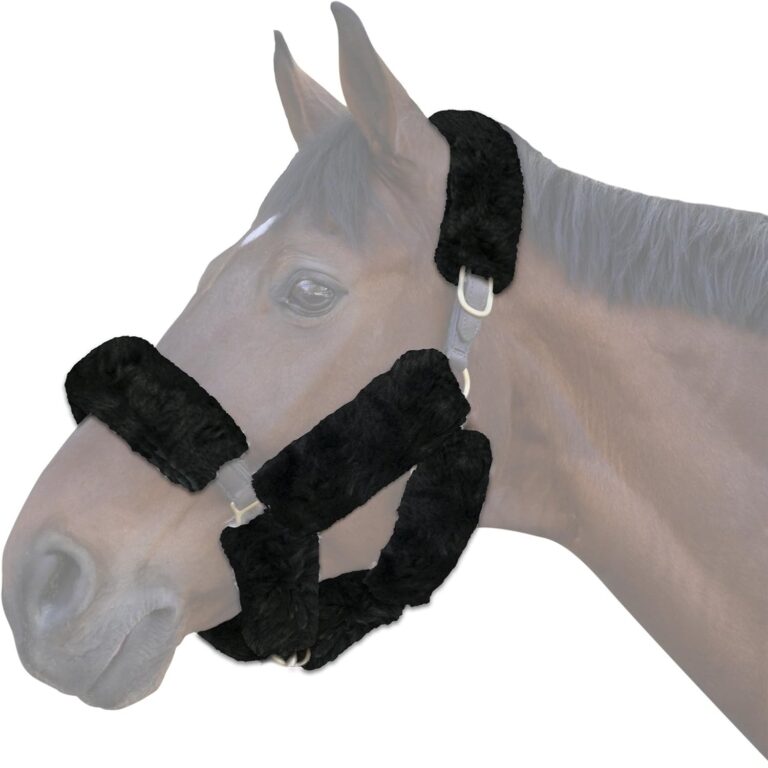
Sheepskin halter covers are slip-on pads that wrap the parts of a headcollar that touch the horse — the noseband, the headpiece behind the ears, the cheekpieces, and sometimes the throat and chin straps. They are sold as sets, usually four pieces or nine pieces, and the halter itself is not included. For a tack shop, they are a small, practical add-on with a clear job: to soften the contact between webbing or leather and the horse’s face, and to prevent the rubbing and sore spots that appear on long wears, in trailers, or on sensitive skin.
Key takeaways
- A halter cover set pads the contact points of a headcollar; the halter itself is sold separately.
- Four-piece sets cover the noseband, headpiece, and cheekpieces; nine-piece sets add the throat, chin, and curb pieces.
- Covers reduce rubbing, but they cannot fix a badly fitted headcollar, so fit comes first.
- Real sheepskin and synthetic fleece behave differently in washing and wear, so label them clearly.
- Stock the common colours and both set sizes, and pair covers with halters on the same display.
What a halter cover set includes
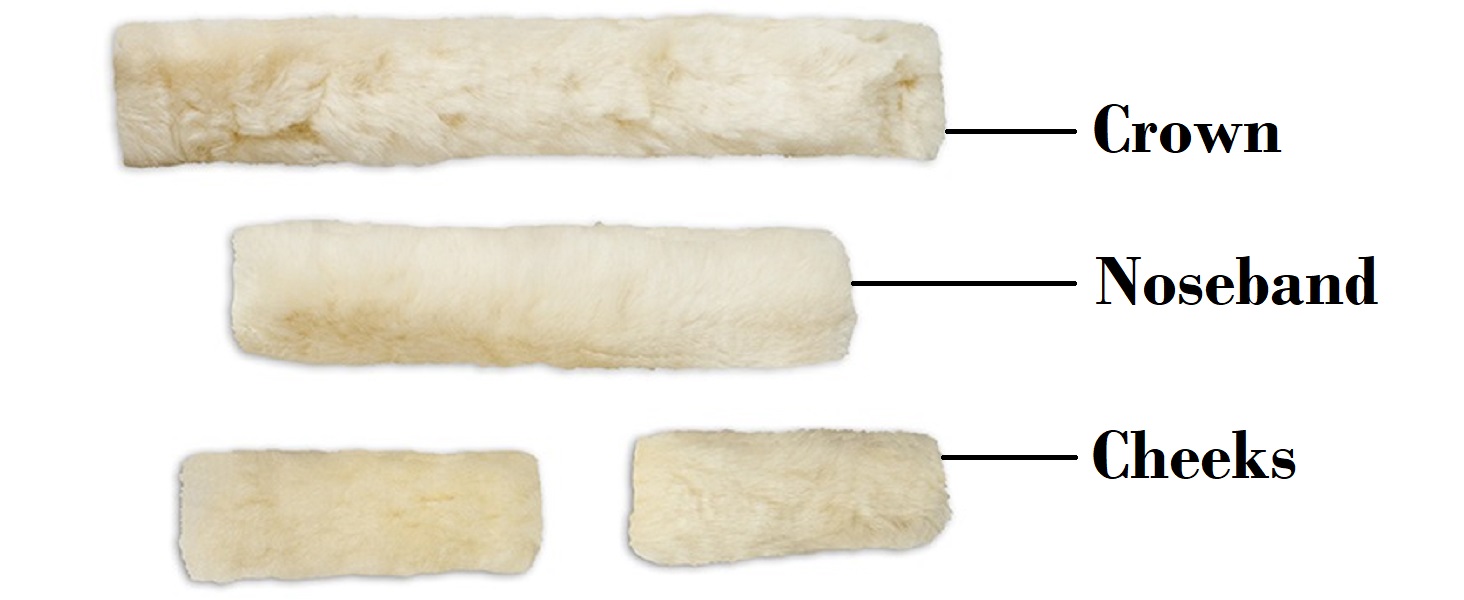
The first thing to get right is what is actually in the packet, because customers often assume the halter is included and are disappointed when it is not. A four-piece set covers the main contact points: one piece for the noseband, one for the headpiece over the poll, and one for each cheekpiece. A nine-piece set adds the smaller straps — the throat pieces, the chin or curb pieces, and the gullet — so that every strap that touches the face is padded. The pieces fasten with hook-and-loop closures that wrap around the existing halter straps, which means they can be taken off for washing and moved from one halter to another of the same size. When you order, confirm the piece count and which straps each piece fits, because set sizes are not standardised across suppliers. The product photos in our range show the sets laid out piece by piece. Our sheepskin tack range groups halter covers with the other sheepskin pieces your customers buy alongside them, including girth covers and half pads.
Why buyers ask for them
Most customers buy halter covers for one of three reasons, and knowing which one helps you recommend the right set. The first is rubbing: a horse that wears a headcollar for long periods, whether stabled, travelling, or standing at a show, can develop sore spots where the noseband crosses the bridge of the nose or where the headpiece sits behind the ears, and a sheepskin cover spreads the pressure and lets the skin breathe. The second is sensitive skin: fine-skinned horses, clipped horses, and horses recovering from a rub will often tolerate a padded headcollar when a bare one causes trouble. The third is travel: a horse that fidgets in a trailer presses its face against the headcollar for the whole journey, and full coverage makes that journey kinder. In all three cases the cover puts a soft layer between a firm strap and living skin. Covers manage friction rather than removing it: a dirty or flattened cover loses its cushioning, so sell them with washing advice — see our saddle pad care and washing guide for sheepskin items.
Fit first: a cover cannot fix a bad headcollar
The most useful thing a shop assistant can do with a halter cover is check the fit of the headcollar underneath it. A cover adds bulk, so a headcollar that fitted snugly before the covers went on may sit differently once they are fitted, and the noseband position matters more than the padding. Fitting guides describe the noseband sitting on the bony bridge of the nose, a couple of finger-widths below the cheekbone, with room to fit two fingers beneath the noseband and under the headpiece. The noseband belongs on bone, not on soft cartilage. The AQA unit on headcollaring a horse teaches the same basics: place the noseband, bring the crownpiece behind the ears, and fasten the buckle so it is neither too tight nor too loose. If the headcollar is the wrong size or hanging too low, padding hides the problem and makes it worse later. Train staff to fit the headcollar first, add the covers second, and re-check the noseband position after the covers are on. Customers may also ask by a different name — halter in North America, headcollar in the UK — see our regional naming guide.
Real sheepskin, synthetic fleece, and care
Not all soft covers are the same, and the label should say what the customer is buying. Genuine sheepskin is a natural hide with the wool still attached; it cushions, breathes, and moulds to the shape of the face, and it needs gentle washing and natural drying to keep the wool soft. Synthetic fleece imitates the look and some of the softness at a lower cost, and it usually tolerates more frequent washing, but it can flatten faster and may not breathe the same way on a hot day. Neither is universally better; be honest about which one you are selling, and do not let a listing call synthetic fleece sheepskin. For care: brush off dried mud, wash with a mild wool or sheepskin detergent where the maker allows it, rinse well, and dry naturally away from direct heat. Keep a spare set for travelling customers, so one set can dry while the other is in use. Our sheepskin girth covers guide covers the same material questions for the girth, and the answers transfer well because the skin contact problem is the same.

Stocking a halter-cover range
A halter-cover range does not need to be large, but it does need to be complete. Start with the two set sizes — four-piece and nine-piece — in the colours your customers already buy for halters: black, brown, and natural cream will cover most requests, with grey as a fourth if your market asks for it. Size the range by the halters you sell — pony, cob, and full — and label the size on the packet and the shelf edge. Display them next to the halters and lead ropes, with one set open on a display halter so customers can feel the wool and work the fastening. They are a natural suggestion at the till for anyone buying a halter or a girth cover — see the sheepskin saddle pads wholesale hub when planning a combined order. Confirm minimums and sample terms with your supplier before ordering — samples are paid, so order a sample of each set size first and check the wool density, the fastening strength, and the true colour before committing to a full run.
FAQ
Does a halter cover set include the halter?
No. Cover sets are the padded sleeves only, and they fasten around the straps of a halter the customer already owns. Make that clear on the shelf ticket, or customers will return the set thinking a piece is missing.
What is the difference between a four-piece and a nine-piece set?
A four-piece set covers the noseband, headpiece, and two cheekpieces. A nine-piece set adds the throat, chin, and curb pieces so that every strap touching the face is padded. Choose the nine-piece set for horses that travel far or wear a headcollar all day.
Can halter covers fix a headcollar that rubs?
They can reduce rubbing from a correctly fitted headcollar, especially on sensitive skin or long journeys. They cannot fix a headcollar that is the wrong size or fitted too low — fit the headcollar first, then add the covers and re-check the fit.
How should customers wash sheepskin halter covers?
Brush off dirt, wash gently with a mild wool or sheepskin detergent where the maker allows it, rinse well, and dry naturally away from direct heat. Do not tumble dry on high heat, and keep a spare set so one can dry while the other is in use.
RFQ checklist: set size (four-piece or nine-piece) and which straps each piece fits; genuine sheepskin or synthetic fleece, stated on the order; wool density and fastening type; sizes (pony, cob, full) and colourways; paid sample approval before bulk production; washing and care instructions for retail customers.
Sources
- Grewal Equestrian — Parts of a Halter, Fit & How to Put on a Halter — halter anatomy, noseband position on the bony bridge of the nose, and two-finger fit guidance.
- AQA Unit Award Scheme — Caring for rescued horses: Head collaring a horse — taught headcollar fitting steps, including fastening the buckle so it is neither too tight nor too loose.
