Bamboo, Recycled and Cork: Sustainable Saddle Pad Materials for Eco-Positioned Brands
Published · Cornovo Saddlery
Eco-positioned saddle pad lines come down to three practical material choices: bamboo-blend face fabrics for feel and appearance, GRS-certified recycled polyester fills for a defensible recycled claim, and cork or organic cotton accents for visible natural detailing. Every green claim needs a certificate and market-correct wording before the hang tag is approved.
Consider a common scenario: a small equestrian brand launches an eco saddle pad line with bamboo-blend faces and recycled fill, priced above their standard range. It sells well for a season — until a customer asks which certification backs the recycled claim. The brand has none; the hang-tag wording came from the factory’s catalog copy, not an audited supply chain. The line is pulled, and the rebrand costs more than the eco range ever made.
This is the risk and the opportunity of eco-positioned saddle pads. Riders will pay for lower-impact products, but they check claims more closely than buyers of standard pads. If you are planning an eco line, the material choices matter — and the verification matters just as much as the material.
This guide covers the main sustainable material options for saddle pads today: bamboo-blend face fabrics, recycled polyester fills, and cork plus other natural components. For each one, we look at what actually changes — feel, wash behavior, cost tier, and the labeling claims you can credibly make.
Key takeaways
- The three practical eco material options for saddle pads are bamboo-blend face fabrics, recycled polyester fills, and cork or other natural components — each changes a different part of the pad.
- Bamboo blends change hand feel and moisture handling; recycled fills change the sustainability story more than the performance; cork is best as an accent component, not a full construction.
- Green claims need backing: recycled-content claims should rest on certified supply chains (such as GRS) confirmed with your factory, not on catalog copy.
- Eco materials typically add a cost tier above standard poly-cotton builds — plan the premium into your line pricing, and confirm exact adders with your factory before costing a line.
- Eco-positioned lines work best as a clearly badged sub-range, not as a quiet spec swap — the claim is part of the product.
What are the sustainable material options for saddle pads?
Three material families cover nearly every eco saddle pad program in production today: bamboo-blend face fabrics that replace or blend into the standard cotton or poly-cotton outer, recycled polyester fills that replace virgin fiberfill inside the pad, and cork or other natural components — cork trim, natural rubber details, organic cotton binding — at the accent level. Each changes a different layer, so they can be used alone or combined, but none of them change the engineering: a bamboo face still needs proper quilting for the discipline, and a recycled fill still needs the right thickness. Eco materials are an ingredient story on top of sound construction — start from a good pad, then green it.
The comparison is worth making against standard builds before you commit. Our face fabrics guide lays out how each outer fabric performs and brands, and our quilting patterns guide covers the construction that sits under any eco face.
How do bamboo-blend face fabrics perform?
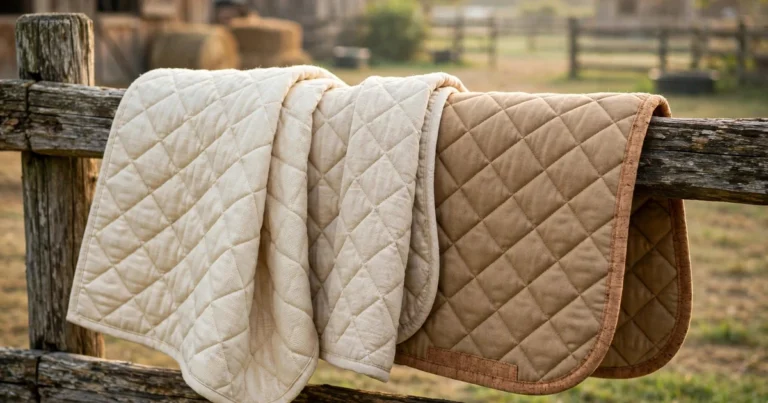
Bamboo-blend faces — typically bamboo viscose blended with cotton or polyester — usually read softer and silkier than standard cotton twill, with a slight sheen that photographs well. The fiber is absorbent, so blends tend to wick and dry reasonably, though the exact behavior depends on the blend ratio and finish. On care, treat them like a delicate standard pad: machine washable, but specify cool wash and no bleach on the label, since bamboo blends generally dislike high heat and harsh detergents. Cost-wise, bamboo blends typically sit a tier above standard poly-cotton faces — confirm the adder with your factory, since blend ratios vary widely between suppliers.
The labeling question matters more than the fabric. Fibers that are processed into viscose or rayon are generally labeled by what they are (rayon), not by their source plant, and the FTC has taken enforcement action over deceptive bamboo claims — so check the textile labeling rules of the markets you sell into before approving hang tags that say bamboo. Labeling mechanics for every market you ship to are covered in our hang tags and care labels compliance guide.
What changes with recycled polyester fills?
Recycled polyester (rPET) fill replaces the virgin polyester fiberfill inside a saddle pad, usually made from recycled PET bottles or post-industrial polyester waste. Performance-wise, it changes very little under normal conditions: fill weight, loft, and wash behavior are effectively the same as virgin polyester at the same spec. That is its strength — an eco claim without redesigning the pad’s feel or care instructions — but it also means the entire value of the upgrade is the claim, and claims need certification.
A pad can only credibly be sold as containing recycled content if the fiber comes through a certified chain of custody. The Global Recycled Standard (GRS) is the widely recognized textile standard here: Textile Exchange operates it as a full chain-of-custody standard covering the recycled material, the processing requirements, and the chemical and social criteria, and its FAQ notes that a consumer-facing GRS label requires at least 50% verified recycled content (20% applies to business-to-business transactions). Ask your factory whether their rPET fill is GRS-certified and whether that certification flows through to your finished product; if the answer is vague, the claim does not belong on your hang tag.
Cost typically runs a modest premium over virgin polyester fill, and availability is good, which makes certified recycled fill the easiest credible eco upgrade for an existing line: same pad, certified fill, honest claim, small cost adder — but only with real, documented certification before the line launches.
Where do cork and other natural components fit?
Cork is the most practical of the natural accent materials. It typically appears as cork-look or real-cork trim, binding accents, logo patches, and occasionally thin layers in grip zones. It reads as unmistakably natural — visually and to the touch — which is why brands use it as the visible signature of an eco range. Treat it as trim and detailing, not as fill or face fabric: there is no standard cork construction that replaces a quilted pad’s layered build, so a cork pad claim on a polyester-filled product would be misleading.
Other natural components worth knowing: organic cotton for faces and binding (same performance as conventional cotton, certified growing — the Global Organic Textile Standard’s framework covers the full processing chain), natural rubber in non-slip applications, and undyed or low-impact-dyed fabrics for a natural palette. Use them as specified accents — cork trim, organic cotton binding — not as a blanket natural pad label when the fill is still polyester. For dyeing, see how color is developed and approved in our seasonal color drops guide.
How do the eco material options compare?
Side by side, each option changes a different layer of the pad and carries a different verification burden: bamboo changes the face and its care label, recycled fill changes the claim and its paperwork, and cork or organic cotton accents change the visible story. Cost tiers below are directional, not quotes — actual adders depend on blend ratios, volume, and your factory’s material pipeline. Every cell in the claim to verify column is a question to put to your factory in writing before sampling.
| Material option | Pad layer affected | Main change | Wash behavior | Relative cost tier | Claim to verify |
|---|---|---|---|---|---|
| Bamboo-blend face | Outer face fabric | Softer hand feel, slight sheen | Cool wash, no bleach, avoid high heat | Above standard poly-cotton | Fiber labeling rules per market |
| Recycled polyester fill | Inner fill | Same performance, eco story | Same as virgin polyester | Modest premium over virgin fill | GRS or equivalent chain-of-custody certification |
| Cork accents | Trim, patches, details | Natural look and feel signature | Trim-dependent; specify on care label | Small adder per unit | Real cork vs cork-look material |
| Organic cotton | Face or binding | Same as cotton, certified growing | Same as standard cotton | Above conventional cotton | Organic certification (e.g. GOTS framework) |
| Natural rubber grip | Non-slip zones | Grip without synthetics | Check heat and detergent limits | Above synthetic grip dots | Natural vs synthetic rubber content |
What should you verify before making green claims?
Verification runs in three passes — the certificate, the wording, and the sample — and a green claim should not ship until all three clear. First, for recycled content, ask the factory for the GRS (or equivalent) certificate covering the fill supplier and confirm it transfers to your finished goods. A factory that is genuinely certified produces documents quickly; one that is not produces explanations. Treat explanations as a no.
Second, verify the wording against each market’s rules. Bamboo labeling, recycled percentage thresholds, and eco as a standalone word are regulated differently across markets. The US FTC’s Green Guides advise marketers not to make broad, unqualified claims like green or eco-friendly and to qualify general claims with clear, prominent, specific environmental benefits. The safe pattern everywhere is specific and modest: fill made with 100% GRS-certified recycled polyester beats eco-friendly pad — it is checkable and defensible.
Third, verify the physical product matches the claim at the sample stage. Check that the bamboo blend ratio on the lab report matches what was quoted, that cork trim is real cork if the tag says so, and that recycled fill performs like the standard fill it replaces — wash-test samples the same way you would any new material. Our MOQ for custom saddle pads is 50 pieces per color, so eco sampling runs fit inside a normal development budget; use them. When you are ready to plan the full program, our private-label launch timeline shows how eco material decisions slot into a normal development calendar.
How do brands position eco saddle pad lines?
The pattern that works is a clearly badged sub-range, not a quiet spec swap. Give the eco line its own name, its own color palette, and hang tags that state the specific material claim with its certification. Riders pay the premium when they can see exactly what it buys — bamboo-blend face, GRS-certified recycled fill is a product story; eco pad is a hope. Because the claim is part of the product, position the eco range where shoppers can find it deliberately rather than hoping they notice the spec.
Price it as a step above your standard line and say why. Eco materials cost more, certification costs more, and hiding the adder in the standard line’s margin punishes your bestsellers. Keep the eco range tight — a few colorways in one or two pad styles is enough to test demand. Launch narrow, prove the premium holds, then extend the palette on reorder. Confirm the exact cost adders with your factory before costing the line, and remember that 50 pieces per color keeps an eco test range small enough to iterate.
What specs should you confirm when requesting a quote?
Send the factory a written eco brief, not a vibe. A workable brief covers each of these:
- Bamboo face: blend ratio (bamboo viscose / cotton or polyester), GSM, mill composition certificate, and the wash-fastness test method with results.
- Recycled fill: GRS (or equivalent) scope certificate covering the fill supplier, plus Transaction Certificates per shipment; confirm the certified material is used across all colorways in bulk.
- Cork and natural accents: real cork vs cork-look, origin proof if claimed on the tag, and placement (trim, patches, binding).
- Labeling: exact hang-tag and care-label wording approved against each destination market’s textile labeling rules; fiber names as required (viscose/rayon, not bamboo, where the market requires it).
- Program terms: MOQ of 50 pieces per color, per-order production lead time, and carton packing for the eco SKUs.
Frequently asked questions
Can I just swap recycled fill into my existing pad designs?
In most cases, yes — recycled polyester fill performs like virgin fill at the same weight, so shape, quilting, and care instructions stay the same. The work is paperwork: confirm the fill supplier’s certification with your factory, get the chain-of-custody documentation, and rewrite the hang tag with the specific certified claim before selling a single unit as recycled.
Is bamboo fabric actually better for horses, or is it marketing?
Mostly the rider’s experience: bamboo blends feel softer and look premium, which matters for a product the rider touches and washes. For the horse, a well-fitted pad with the right fill matters far more than the face fiber. Sell bamboo on feel, appearance, and moisture handling — do not invent performance claims about the horse that you cannot back up.
What is the cheapest credible eco upgrade for a saddle pad line?
Certified recycled polyester fill is typically the lowest-cost credible move: same pad construction, modest material premium, and a checkable GRS-backed claim. Cork trim or organic cotton binding are the next step up in cost and visual storytelling.
Do I need separate certifications for each colorway?
The material certification (GRS and similar) covers the material supply chain, not individual colors, so one valid certificate covers all colorways using that material. What changes per colorway is lab-dip approval and sampling — the same development overhead as any custom color. Confirm with your factory that the certified material is actually used across all colorways in bulk.
How do I brief a factory on an eco saddle pad program?
Specify the eco material by name and standard, not by vibe: bamboo-viscose/cotton blend face, blend ratio and GSM to be confirmed, GRS-certified recycled polyester fill, certificate required, real cork trim at binding ends. Ask for material certificates with the quote and wash-test the samples. Our MOQ is 50 pieces per color.
Eco-positioned saddle pads reward brands that get the details right: certified materials, market-correct labeling, and a visible sub-range that tells the story on the hang tag. Send us your target materials and certification requirements, and we’ll quote the eco build against your standard spec — with the material certificates to back every claim you plan to print.
Sources & Further Reading
- Textile Exchange — Global Recycled Standard & Recycled Claim Standard: chain-of-custody certification for recycled content (supports the GRS requirement for recycled claims).
- Textile Exchange — What is the Global Recycled Standard (GRS)?: 50% verified recycled content for consumer-facing labels, 20% for B2B transactions.
- FTC — Green Guides (16 CFR Part 260): principles for environmental marketing claims, including avoiding broad unqualified green/eco-friendly claims.
- FTC — revised Green Guides release: notes the FTC’s enforcement actions on deceptive bamboo claims (supports checking bamboo labeling per market).
- GOTS explainer — organic labeling thresholds: organic at 95%+ organic fibers, made with organic at 70%+, full-chain processing criteria.
- Hang Tags & Care Labels Compliance — label mechanics per market.
- Face Fabrics Compared — how each outer fabric performs and brands.
