Saddle Pad Face Fabrics Compared: Cotton Twill, Poly-Cotton, Bamboo, and Mesh
Published · Cornovo Saddlery
Consider a common scenario: a tack shop’s private-label dressage pads come back from the factory in the right navy, with the right quilting — but the face feels different. The factory substituted a poly-cotton face to hold the quoted price. The pads are technically the same design. Regular customers notice the difference immediately.
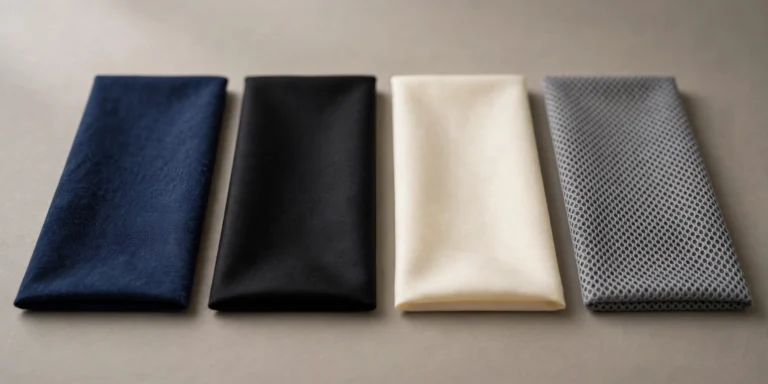
The face fabric is the outer shell of a saddle pad — the layer that carries the color, the print, and your logo. For most private label programs the practical choice comes down to cotton twill for a classic look and embroidery, poly-cotton for wash-and-wear value, bamboo for softness and a premium story, and mesh panels for breathability.
The face fabric is what riders see and touch first. It decides the pad’s look, its print quality, how it wears, and a surprising share of its cost. Most buyers spec the fill and the shape carefully, then let the factory pick the face — and unspecified faces drift toward the cheapest option. This guide compares the four main options so you can spec the face fabric deliberately.
Key takeaways
- The face fabric is the outer material of a saddle pad; cotton twill, poly-cotton, bamboo blends, and mesh cover nearly all wholesale saddle pad lines.
- Cotton twill suits classic lines and embroidery under normal use, but wrinkles and dark colors can fade with heavy sun exposure and frequent washing.
- Poly-cotton suits high-volume, wash-heavy programs with its wrinkle resistance and colorfastness; bamboo blends suit premium and eco-positioned collections where customers read care labels.
- Face fabric affects print and embroidery quality more than any other material choice — test your branding method on the actual face fabric, not on a substitute.
- Spec the face fabric by name, weight, and composition on the tech pack; our canonical MOQ is 50 pieces per color, per face fabric.
What is a saddle pad face fabric?
The face fabric is the outer shell material of a saddle pad — the quilted top layer that carries the color, the pattern, and your branding. Under it sit the fill (foam, felt, or fiber) and the lining that contacts the horse. Buyers often focus on fill thickness and pad shape, but the face fabric is what the customer judges in the first three seconds on the shelf.
Face fabrics are typically specified by fiber composition and weight (GSM). A cotton twill, 260 GSM face behaves very differently from a poly-cotton, 200 GSM face even in the same pad pattern — different drape, different color depth, different embroidery result. When a factory quotes a pad, the face fabric is one of the largest material cost lines, which is why unspecified faces drift toward the cheapest option.
How do the four main face fabrics compare?
Performance below is conditional, not ranked: the same fabric name covers a wide span of compositions, weights, and finishes, and a heavy, well-finished poly-cotton can outperform a light, cheap cotton twill. Read each row as typical behavior under stated conditions, and confirm the actual mill spec for your program.
| Face fabric | Typical strengths — and when they hold | Watch-outs — and when they appear | Branding surface — confirm per method | Relative cost position |
|---|---|---|---|---|
| Cotton twill | Classic matte look and natural texture on stable weaves; takes embroidery cleanly when the weave is dense enough to hold stitches | Wrinkles in storage and transit; dark colorways can fade with prolonged sun exposure and frequent washing — spec care labels honestly | Strong for embroidery; good for prints | $$ |
| Poly-cotton blend | Holds shape and color through repeated machine washing; wrinkle resistance suits schooling barns and rental fleets | Slight sheen reads as less premium on heritage lines; polyester content limits the natural fiber story | Strong for sublimation and screen print; good for embroidery on denser blends | $–$$ |
| Bamboo / bamboo blend | Noticeably softer hand feel than cotton twill; natural-fiber story supports premium and eco-conscious positioning | Needs correct wash care to keep its softness; best placed in lines where customers read care labels, not barn-workhorse programs | Good for embroidery; test prints on the actual face before approving | $$–$$$ |
| Mesh (with solid panels) | Breathability along the spine channel or under-flap panels; technical, sporty look for schooling and cross-country lines | Snag risk on rough surfaces; not a branding surface — logos and colorwork live on the solid panels | Limited — branding goes on solid panels | $$ |
Cost positions are relative and directional only — confirm actual pricing in your quotation, since composition percentages, GSM, and finishing move the number. No face fabric wins on every axis. A premium dressage pad earns its price partly through a cotton twill face with crisp embroidery, while a high-volume schooling pad needs poly-cotton’s wash-and-wear economics. Match the face to the line’s promise.
When is cotton twill the right call?
Cotton twill is the traditional saddle pad face — the diagonal weave gives a subtle texture that reads as quality, takes embroidery well, and photographs with a rich matte finish. Twill is a weave, not a fiber: the diagonal structure makes cotton twill more durable and less prone to wrinkling than plain-weave cotton of the same fiber (Selfmade’s twill fabric guide). For heritage English brands and premium schooling pads, it remains the default.
The trade-offs are maintenance and colorfastness. Cotton wrinkles, and dark cotton faces can fade with prolonged sun exposure and repeated washing faster than synthetics. If your line promises easy care, cotton twill works against that promise — spec the care label honestly and keep the fade behavior in mind for dark colorways. Heavier twills hold quilting definition better than lighter ones, which can look limp on larger dressage pads; confirm the GSM and weave density with the mill rather than relying on the fabric name alone.
When do poly-cotton, bamboo, or mesh make more sense?
Poly-cotton blends are the workhorse of volume saddle pad programs. The polyester component adds wrinkle resistance, colorfastness, and dimensional stability — pads come out of the wash looking closer to new, which is exactly what schooling barns and riding schools need. Poly-cotton also takes sublimation and screen printing well, making it the face of choice for bold graphic designs and seasonal color drops.
Bamboo blends (usually bamboo viscose mixed with cotton or polyester) trade on softness and story. The hand feel is noticeably silkier than cotton twill, and the natural-fiber positioning supports premium and eco-conscious collections. Cost runs higher, and bamboo faces need correct wash care to keep their softness — position them in lines where the customer reads care labels, not in barn-workhorse programs.
For mesh, think panels rather than full faces. Full-mesh pads exist but most successful designs use mesh strategically — along the spine channel or under the flap — for breathability while keeping solid fabric where branding and structure live. Mesh adds a technical, sporty look that suits schooling and cross-country lines. See also our guide on stitch and foam density specs when pairing mesh panels with dense quilting.
How does face fabric affect branding and customization?
More than any other material decision. Embroidery needs a stable, dense face — cotton twill and heavier poly-cottons give clean stitch definition, while lightweight or stretchy faces can pucker. Printed designs need a smooth, colorfast surface — poly-cotton suits sublimation, cotton suits a vintage washed-print look. For the full branding workflow, see saddle pad custom branding: embroidery and logo guide.
Always test your actual branding method on the actual face fabric before approving bulk. A logo that embroiders crisply on twill can sink into a brushed bamboo face; a sublimation print that pops on white poly-cotton looks muddy on a natural cotton base. Request a branded strike-off (a small sample with your logo applied) as part of the sampling round — it is a small cost that prevents the most visible category of bulk disappointment.
Remember that face fabric interacts with quilting. Dense diamond quilting on a lightweight face can cause puckering between stitch lines; the factory may need to adjust stitch density or add a stabilizing interlining. Flag the quilting pattern and face fabric combination explicitly in the tech pack so the sampling round tests them together — our binding and edge finishing guide covers the companion spec that frames the face.
How do you spec face fabric on a purchase order?
Name it completely: fiber composition with percentages, weave type, and GSM with an acceptable tolerance. Cotton twill, 100% cotton, 260 GSM is enforceable; quality cotton face is not. Add the colorway reference (Pantone TCX or approved lab dip) and the branding method with its placement. Wash-care claims should match what the face can actually deliver — see how to wash and care for saddle pads.
Note that face fabric is a per-colorway commitment at most factories — our canonical MOQ is 50 pieces per color, and that applies per face fabric choice. Running the same pad in cotton twill navy and poly-cotton black is two material programs, not one. Plan your colorway count against that reality: fewer face fabrics across more colorways keeps programs efficient.
What specs should you confirm when requesting a quote?
- Fiber composition with percentages, weave type, and GSM with tolerance — plus the mill’s composition certificate or test report
- Colorway reference (Pantone TCX or approved lab dip) and whether the quoted price covers custom dyeing
- Branding method and placement, and whether a branded strike-off is included in the sampling round
- Quilting pattern tested together with the face fabric — including any stabilizing interlining if needed
- Care-label claims the face can support (machine wash, tumble dry) matched to the line’s promise
- MOQ per color and per face fabric — our canonical MOQ is 50 pieces per color
Frequently asked questions
Can I mix face fabrics within one pad design?
Yes — contrast bindings, mesh spine panels, and piping in different materials are standard design tools. Spec each material separately on the tech pack with its own composition and colorway. Mixed-material designs add sampling complexity, so allow an extra round for the first production.
Under typical wash routines, which face fabric is easiest to keep clean?
Poly-cotton generally leads under normal machine washing — it resists staining, releases dirt in the wash, and dries wrinkle-free, which is why riding-school bulk programs favor it. Conditions apply: open-weave mesh can trap debris, cotton twill shows dust and needs more care, and bamboo keeps its softness best on gentler cycles. Match the fabric to the program’s actual laundry habits.
Does face fabric affect pad fit or saddle stability?
Indirectly. Heavier, stiffer faces hold the pad’s shape better and can slightly improve stability; very slick synthetic faces may need a non-slip lining or girth system to compensate. The fill and the pad’s cut matter more for fit, but don’t ignore the face’s contribution to how the pad sits.
How do I verify the face fabric in bulk production?
Burn-test a fiber sample or request the mill’s composition certificate, check GSM with a fabric scale against the approved spec, and compare hand feel and color to the approved swatch. Face fabric substitution is one of the most common bulk deviations — put it on the inspection checklist explicitly.
What face fabric works best for embroidered logos?
Stable, medium-to-heavy woven faces: cotton twill or a dense poly-cotton. Avoid embroidering directly on mesh or very lightweight faces without a stabilizer backing. Always approve a branded strike-off before bulk.
Choose the face fabric that matches your line’s promise — traditional, workhorse, premium, or sporty — and spec it by composition, weave, and GSM so bulk matches the sample. Send us your pad design and target price, and we’ll recommend the face fabric, fill, and branding combination that hits your positioning at 50 pieces per color, with swatches of each option before you commit.
Sources & further reading
- Selfmade — What is twill fabric: twill as a weave type (diagonal structure), cotton twill’s durability and wrinkle resistance versus other cotton fabrics.
- Saddle pad custom branding: embroidery and logo guide
- Saddle pad stitch density and foam density tech sheet
- Saddle pad binding and edge finishing buyer’s guide
- How to wash and care for saddle pads
- How to launch a private label saddle pad line: timeline
