
How Tack Shops Run Saddle Pad Fitting Clinics: An In-Store Event Playbook
Published · Cornovo Saddlery
Consider a common scenario: a tack shop announces its first bring your horse fitting day as an open house — no appointment slots, no consent forms, pads handed over in a busy yard while nobody checks the withers. Contrast that with the same event run on a schedule: every rider booked, every trial supervised, every fit written down. The difference between those two days is not luck — it is the playbook below.
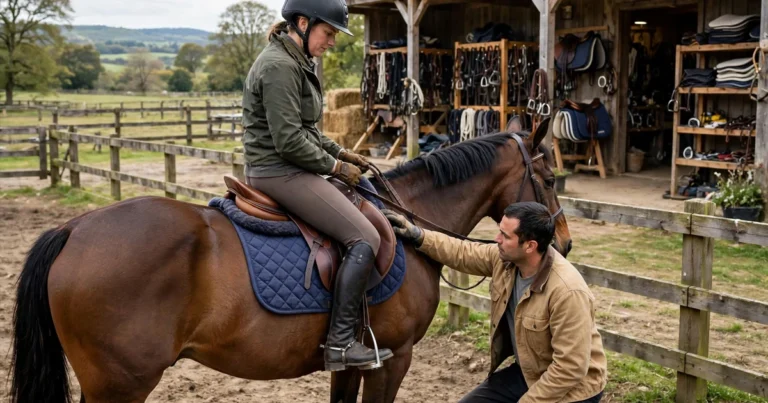
A saddle pad fitting clinic is an appointment-based, in-store event where riders bring their horses and trial pads on the horse’s back under trained staff supervision. It sells fit confidence: riders buy on evidence instead of theory, and every slot ends with a written fit recommendation that feeds a structured 72-hour follow-up — the engine that converts a trial day into orders.
Key takeaways
- A saddle pad fitting clinic is an appointment-based event where riders trial pads on their own horses under staff supervision — it sells fit confidence, not just pads.
- Run it in four phases: pre-event preparation (4–6 weeks out), clinic-day flow (timed slots), same-day conversion, and a 72-hour follow-up sequence.
- Trial rides need a written safety protocol: consent forms, helmets, staff-supervised mounting, flatwork only, and a strict limit on horses in the arena at once.
- Stock a clinic SKU matrix covering dressage, all-purpose/jumper, half pads, and western pads — the clinic only converts if the right pad is in the room when the horse is.
- Private-label clinic programs follow the standard custom order path at 50 pieces per color MOQ; demo pads can be planned as part of the same order.
What is a saddle pad fitting clinic?
A saddle pad fitting clinic is a scheduled event — usually a Saturday — where customers book timed appointments, bring their horses to the shop’s arena or a partner barn, and trial different pads on their own horse with trained staff guiding the fitting. The horse is present, the saddle goes on, and the pad is judged on the back, not on the shelf.
This differs from everyday fit advice in one decisive way: walk-in advice happens without the horse, so the customer buys on theory. A clinic happens with the horse, so the customer buys on evidence — clearance checked, balance felt, rider feedback immediate. That evidence is what justifies a premium pad.
Clinics also differ from saddle-fitter appointments: a fitter diagnoses the saddle; a clinic lets the customer choose the pad. Position it that way in the marketing — find the pad your horse’s back actually wants — and trainers will send clients instead of seeing the shop as competition. For diagnosing the underlying fit problems your staff will meet at the clinic, train them on our fit-issues guide first.
Phase 1: How do you prepare a fitting clinic 4 to 6 weeks out?
Four to six weeks before the event, lock the four things a clinic cannot run without: venue, slots, stock, and paperwork.
Venue. You need a safe working area — an arena, a round pen, or a quiet paddock — within walking distance of the shop. If the shop has no arena, partner with a nearby barn: they supply the arena, you bring the customers, and their boarders get priority slots.
Appointment slots. A workable starting template is 30-minute slots with 10-minute buffers: one horse in, one horse cooling out — roughly twenty appointments over a six-hour day with one fitter. Treat that as a starting assumption, not a rule: adjust slot length and headcount after your first clinic based on how long your fitter actually needs per horse. The booking form needs three fields the follow-up depends on: discipline, current pad, and fit concern.
Staffing. Two roles, filled all day: a fitter who checks every trial, and a runner who manages horses, fetches pads, and runs checkout. One person cannot do both — the clinic collapses the moment the fitter is stuck at the register.
Marketing. Announce three weeks out to the email list and social accounts, with a flyer at partner barns two weeks out. The message that fills slots names the benefit: Book a 30-minute fitting slot — bring your horse, ride in the pads, take home a written fit recommendation. In our experience, posting the remaining slot count on the sign-up page fills clinics faster than adjectives — it is a tactic worth testing, not a guaranteed outcome.
Paperwork. Prepare a one-page consent and liability form plus a fit-notes sheet per horse (discipline, saddle type, current pad, measurements tried, recommendation). The consent form is not optional — no horse works without a signed form. Real equestrian venues require signed waivers from anyone riding or working with horses on their grounds in advance (see Sources), and a clinic should hold itself to the same standard.
Phase 2: How should clinic day run?
Clinic day runs on the clock. The fitter owns the horse’s back; the runner owns everything else.
Check-in (5 minutes). Runner confirms the booking form and collects the signed consent form. No horse works without a signed form — make this a hard rule, not a suggestion.
Baseline and trial (20 minutes). Fitter checks the horse’s current pad under the saddle — wither clearance, bridging, pressure points — as the baseline the recommendation is measured against. Then try at most three pads: in our experience, beyond that the horse tires and the rider’s feedback blurs. Start from the rider’s stated concern and pull from the SKU matrix below, rechecking clearance and balance with each change and writing measurements on the fit-notes sheet.
Recommendation and checkout (5 minutes). Fitter gives a written recommendation — pad type, size, and why — on the fit-notes sheet and hands it to the runner. Runner quotes the price, offers same-day booking (see phase 3), and the customer leaves with the sheet. That sheet is the 72-hour follow-up’s ammunition.
Trial-ride safety protocol — written and briefed before the first horse arrives:
- Helmets on, always. Every mounted rider wears one — no exceptions, no just walking. Equestrian centers commonly require ASTM/SEI certified helmets for anyone riding on their grounds; adopt the same standard for your clinic.
- Staff-supervised mounting. A staff member holds the horse and checks girth tightness at every mounting.
- Two horses maximum in the arena. One working, one cooling — never a group warm-up.
- Flatwork only. Walk, trot, canter — no jumping, no gallop sets, no loose schooling.
- Horses stay haltered or held. No tying to trailers unattended, no free-standing horses at the pad table.
- Stop the trial on distress. Ears pinned, bucking, bolting — the trial ends and the horse rests. The sale can wait.
What pads should the clinic stock?
A fitting clinic converts only when the pad the horse needs is physically in the room. Stock to the matrix — not to the season’s bestsellers — for the event week. Treat the rows below as a starting assortment, then over-weight the categories your booking forms name: if most riders booked with my pad slips back, bring the half-pad options in depth.
| Discipline | Pad categories to have on hand | What to bring multiples of | Why it matters at a clinic |
|---|---|---|---|
| Dressage | Quilted dressage pads, straight and contoured | White and one dark colorway; several sizes | Dressage riders trial for wither clearance and saddle balance under a long flap — size range wins the slot |
| All-purpose / jumper | All-purpose pads, close-contact shapes | Neutral colors; forward-flap and standard | The largest walk-in group; stock depth here covers a large share of appointments |
| Half pads | Sheepskin and felt half pads | Front-riser and standard; black and white | The classic fix the fit product — many fit complaints from booking forms resolve to a half pad trial |
| Western | Work pads and show-pad options | The shop’s standard sizes; two thicknesses | Western riders trial for spine contour and thickness feel — bring the standard sizes so comparisons are honest |
| Cross-category | Girths/cinches in common lengths | One step up and down from standard | A slipping pad is often a girth problem — the fitter should be able to rule that out on the spot |
Two matrix rules. First, designate demo stock: trial pads get sweat, hair, and arena dust — pull two pieces per key SKU as marked demos and never sell them as new. Second, stage the room like a selling floor, not a warehouse: the clinic’s trial table should look like your merchandising displays, because the horse is not the only audience — the waiting riders are watching.
Phases 3 and 4: How do you convert fittings into orders within 72 hours?
Conversion starts at checkout, not after. The runner quotes the recommended pad on the spot and offers two same-day paths: buy from stock now, or place an order with a deposit if the size or colorway is not on the shelf. A deposit — even a small one — is the line between a lead and an order. Then the 72-hour sequence runs on the fit-notes sheet:
| When | Message | Script |
|---|---|---|
| 24 hours | Thank-you + notes | Thanks for bringing [horse name] — attached is the fit sheet. The [pad type/size] we trialed addressed the [issue]. Happy to hold one in your color until Friday. |
| 48 hours | Reminder | Quick check-in on [horse name]’s fitting — several riders from Saturday have picked up their pads. Want me to set one aside for you? |
| 72 hours | Last call + alternative | Final heads-up: I’m releasing held clinic stock tonight. If the [pad] isn’t the one, tell me what didn’t work and I’ll suggest an alternative. |
Every message references the horse’s name and the fit issue from the notes sheet. In our experience, messages that cite the horse and the issue get answered; generic thanks for coming emails rarely do. After 72 hours, stop and move non-buyers to the regular list with an invite to the next clinic.
What specs should you confirm when requesting a quote for clinic stock?
Clinic stock is a standard private-label order with an event deadline attached — confirm it like one:
- Discipline mix and slot count — how many pads per discipline and size, so the factory can plan the cutting schedule.
- Demo stock — two extra pieces per key SKU, marked as demos in your order (they take sweat and arena dust and must never be sold as new).
- Private-label branding for demos — whether demo pads carry your label or plain binding, confirmed before sampling.
- Event-date delivery — the confirmed delivery date for the clinic stock, with buffer before the event for pressing and tagging.
- MOQ — our standard 50 pieces per color; confirm whether demo pieces count within the same colorway MOQ.
Frequently asked questions
How many horses can a clinic handle in one day?
Plan 30-minute slots with 10-minute buffers — about 20 horses over six hours with one fitter, as a starting template. Two fitters can roughly double that, but keep the two-horses-maximum arena rule and stagger start times.
Do we need liability waivers and insurance?
Use a signed consent form for every horse and rider — it is the minimum. Real venues require signed waivers from anyone riding or working with horses on their grounds in advance (see Sources), and a clinic should hold itself to the same standard. Talk to your insurer before the first clinic about event coverage for customer horses on your premises; many tack-shop policies need an extension for organized riding events. Confirm the specifics with your broker, not with this article.
What if no pad in the matrix suits the horse?
Say so, and write down why — wrong saddle shape, a back problem that needs a fitter or vet, or a size outside your range. An honest not today with a referral builds more business than a forced sale, and the notes sheet keeps the door open for a custom order later.
Can a brand sponsor the clinic?
Yes — sponsored demo pads from a brand or distributor are common, and the sponsor’s logo on the flyer is fair trade. Keep one rule: the fitter recommends what fits, not what is sponsored. Customers spot a biased recommendation instantly, and the clinic’s credibility is the asset.
How does the factory support a clinic program?
Order demo pads as part of your regular private-label run — two extra pieces per key SKU at the same 50 pieces per color MOQ covers the demo table and your first clinic orders. For clinic-exclusive colorways, confirm the timeline with the factory early: strike-off and bulk lead time still apply — confirm the sampling and production calendar per order.
Planning a fitting clinic and want pads to stock the trial table? Send us your discipline mix and slot count — we will quote private-label saddle pads and demo stock at 50 pieces per color MOQ, timed to your event date.
Sources & Further Reading
- NEECA Liability Release Form — a working equestrian center’s waiver policy: anyone riding or working with horses on the grounds must submit a signed waiver in advance, and ASTM/SEI certified helmets are strongly recommended.
- Correcting Common Saddle-Fit Issues with Pads — dealer staff training on diagnosing the fit problems your clinic fitter will meet.
- Saddle Pad Display and Merchandising — how distributors help tack shops sell through after the clinic.
- Saddle Pad Inventory Planning — colorway depth and reorder math so clinic winners stay in stock.
- The Tack Shop Buying Calendar — when to order clinic stock against the season.
- Horse Show Grooming Product Programs — grooming testers at the clinic check-in table turn waiting riders into a second category.
