
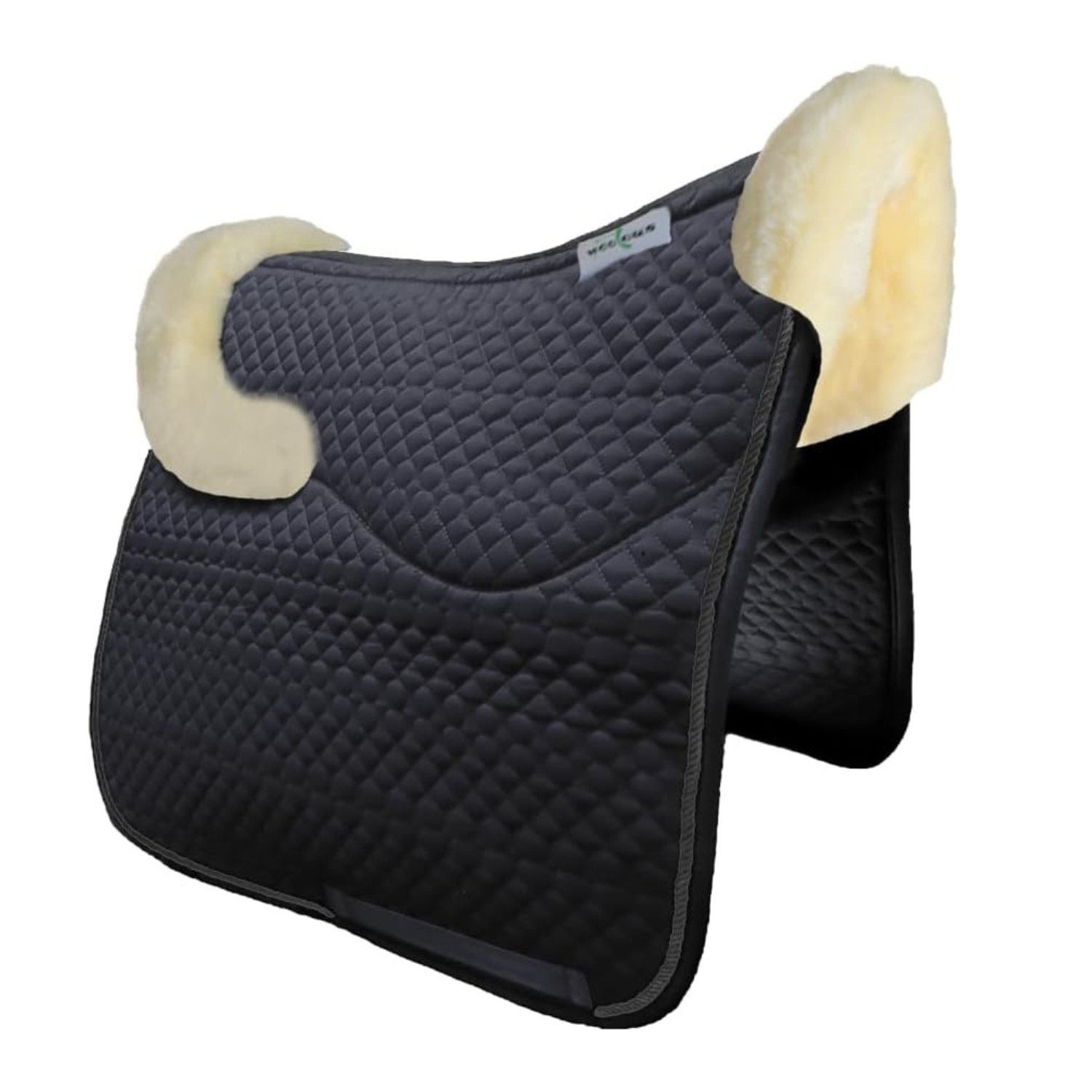
Consider a common scenario: a tack shop\’s riders buy their saddle pads from the shop — then buy their shampoos, detanglers, and finishing sprays from a big online retailer on the way home. The pad was the destination purchase; the grooming line was the forgotten add-on. The shop carried one dusty shampoo SKU and concluded the category \didn\’t work.\ It didn\’t work because the shop treated consumables like equipment.
Horse grooming products are the highest-repeat line a tack shop can carry: shampoo, detangler, finishing spray, and coat conditioner — four product types that bring riders back monthly while pads sell seasonally. Stock a narrow, deep assortment split between show-day and everyday formulas, put testers where riders can touch them, and use show-day kits to pull pad buyers into the category. Confirm case configuration and MOQ with your supplier before planning the assortment.
Key takeaways
- Horse grooming products for tack shops come in four core types: shampoos, detanglers, finishing sprays, and coat conditioners — each with a distinct job in the grooming routine.
- Show-day formulas differ from everyday ones in concentration, shine additives, and price — stock both, and label the difference on the shelf.
- Grooming is a consumable, repeat-purchase category: it brings riders back monthly while pads sell seasonally.
- The pad wall and the grooming shelf feed each other — \show day kits\ and register-adjacent testers turn one purchase into two.
- Wholesale terms for grooming assortments are commonly modest compared with textile lines — confirm the exact MOQ, case configuration, and lead time with your supplier before planning the assortment.
What are the four core horse grooming product types?
The four core types are shampoo, detangler, finishing spray, and coat conditioner. Together they cover the full grooming routine: clean the coat, free the mane and tail, add show-day finish, and maintain the coat between washes.
| Product | Job | When it is used | Typical format |
|---|---|---|---|
| Shampoo | Cleans the coat and skin; removes sweat, dirt, and stain | Bath days — weekly in season, before shows | Concentrate or ready-to-use bottles, commonly 500 ml to 1 L |
| Detangler | Loosens knots in mane and tail so they brush out without breakage | Before braiding and plaiting; after every bath | Spray bottles, silicone or oil-based |
| Finishing spray | Adds shine and a slick, dust-repelling surface for the ring | Show morning, after the final brush | Spray bottles; the premium-priced item in the line |
| Coat conditioner | Maintains coat health and softness between full baths | Daily or every few days in the grooming routine | Spray or wipe-on; the highest-repeat item |
The buying point: customers do not choose between these — they use all four in sequence. A shop that stocks only shampoo forces the customer to complete the routine elsewhere. Stock the family, and one customer\’s show season becomes four SKUs of repeat business instead of one.
What is the difference between show-day and everyday grooming products?
Show-day products are concentrated, shine-heavy formulas built for one job: making the horse look its best under the judge\’s eye for a few hours. Everyday products are milder, coat-health-oriented formulas built for frequent use without drying the skin. Selling the difference — on the shelf, not just in the catalog — is what makes the category work at retail.
| Aspect | Show-day formulas | Everyday formulas |
|---|---|---|
| Shampoo | Whitening/brightening concentrates for grays and white socks; higher price per ml | Gentle, pH-balanced daily-use shampoos; larger, value-sized bottles |
| Detangler | Heavy-duty, long-lasting slick for braiding and plaiting that must hold all day | Light daily detangling sprays for routine mane and tail care |
| Finishing spray | Maximum-gloss show sheen with dust-repellent finish; applied ringside | Light coat polish or shine spray for schooling and lessons |
| Coat conditioner | Intensive pre-show conditioning treatments the night before | Daily leave-in conditioners that keep the coat soft between baths |
| Price position | Typically premium — the customer buys the result in the ring | Typically value — the customer buys the bottle they reach for daily |
| Repurchase rhythm | Seasonal — spikes before show season | Steady — monthly refills year-round |
Shelf this split explicitly: a \Show Day\ endcap and an \Everyday Care\ bay, with a short shelf talker explaining which is which. Riders already think in these two modes — the shop that mirrors their thinking wins both baskets.
How does a tack shop build a grooming product program?
Build the assortment narrow and deep: two to three SKUs per type — one show-day and one everyday option — rather than ten shampoos that cannibalize each other. Eight to twelve SKUs total is a sensible starting assumption for most shops; adjust it after two months of refill data rather than at launch.
Testers sell the category. Put a tester bottle of the finishing spray and the detangler at the grooming shelf — customers who feel the slick on their own hand buy the bottle. Testers are the cheapest sales staff in the shop.
Keep the scent family consistent. Riders notice when the shampoo smells like citrus and the finishing spray like lavender. A coherent scent across the line reads as a program, not a pile of bottles — and it is the simplest private-label decision you will make.
Time the order to show season. Grooming spikes with the show calendar: build stock depth on show-day formulas several weeks before the local season opens, and keep everyday formulas steady year-round. The rhythm mirrors saddle pad buying — see our buying calendar guide — so plan the two categories on the same calendar.
On wholesale terms: grooming products commonly ship as case assortments rather than per-color MOQs, and minimums are usually modest compared with textile programs — but terms vary by formula and packaging. Confirm the exact MOQ, case configuration, and lead time with your factory or supplier before committing the assortment.
How do grooming products cross-sell with saddle pads?
Pads are the anchor purchase and grooming is the add-on — but the traffic runs both ways. A rider who comes in monthly for coat conditioner walks past the pad wall twelve times a year; a rider who buys a show pad in April is one suggestion away from a show-day grooming kit. Four mechanics make the cross-sell work:
1. The show-day kit bundle. Pair a show pad with a finishing spray and detangler as a \Show Day Kit\ at a small bundle discount. The kit justifies a higher ticket and moves the premium grooming SKUs that otherwise sit. As a starting rule, one slow-moving grooming SKU per kit maximum — bundles digest slow stock, they don\’t rescue dead stock.
2. Register-adjacent testers. A finishing-spray tester at the register catches every pad buyer at the moment of maximum spending willingness. In our experience, the add-on rate on a felt sample beats any endcap.
3. Fitting clinics as sampling venues. Our fitting clinic playbook brings riders and horses to the shop for hours — put grooming testers at the check-in table and a finished horse is a walking advertisement for the shine. Clinics sell pads; the shine sells the spray.
4. Refill rhythm marketing. Everyday grooming refills are monthly — put a \refill reminder\ card in every grooming bag pointing back to the shop, and time a pad-care email (washing guide, new colorways) to the same cycle. The consumable keeps the relationship warm between pad purchases.
What should you confirm when requesting a quote?
Grooming products are usually sourced on a different production line from saddle pads — pads are cut-and-sew textiles, grooming is filled cosmetics with different equipment, ingredients, and compliance. Some trading suppliers bundle both for one shipment, which simplifies logistics. Confirm the two tracks separately:
- Grooming assortment — case configuration, MOQ, and lead time for the shampoo/detangler/finishing-spray/coat-conditioner line, confirmed with the grooming supplier.
- Pad anchor stock — private-label saddle pads for the show-day kits at our standard 50 pieces per color MOQ.
- Kit packaging — whether gift-box or bundle packing is available for the show-day kits, and its MOQ and dimensions.
- Consolidated shipment — whether grooming lines can be sourced through a partner and consolidated into one shipment with the pads.
Frequently asked questions
Are grooming products private-label friendly?
Yes — custom labels on standard formulas are common practice in the category. The label, scent selection, and bottle shape are the branding levers; the formula underneath is typically the supplier\’s proven base. Confirm minimum runs and label artwork requirements with your supplier — they are usually far lower than textile MOQs.
What about ingredient and performance claims on the label?
Keep claims conservative and verifiable: \adds shine,\ \detangles,\ \for equine use.\ The line that matters is the one between cosmetic and drug claims: in the US, a product that claims to treat disease or affect the body\’s structure or function is regulated as a drug, not a cosmetic — even if it looks like an ordinary grooming product (see Sources). Avoid veterinary or therapeutic claims (healing, anti-inflammatory, medicated) unless the product is registered for them in your market. When in doubt, have the supplier confirm what the label may legally say.
What is the shelf life of grooming products?
Most equine shampoos, detanglers, and sprays carry a shelf life of two to three years unopened as a typical supplier figure — always check the printed best-before date and confirm with your supplier. Store them out of direct sun and freezing temperatures — heat degrades fragrances and cold can split emulsions. Rotate stock first-in, first-out like any consumable.
Can one factory supply both saddle pads and grooming products?
Usually not from the same production line — pads are cut-and-sew textiles, grooming products are filled cosmetics with different equipment, ingredients, and compliance. Some trading suppliers bundle both for one shipment, which simplifies logistics. Confirm with your factory whether they produce in-house or source the grooming line from a partner.
How much shelf space does grooming need?
Less than you think: an eight-to-twelve SKU starting assortment fits on a single four-foot gondola section with testers. Track refill velocity for two months, then expand the winners. Shelf space follows refill data, not launch optimism.
Building a grooming program alongside your pad line? Tell us your shop size and show-season dates — we will advise on assortment structure and cross-sell bundles, and quote private-label saddle pads at our standard 50 pieces per color MOQ to anchor the program.
Sources & Further Reading
- Reidel Law Firm: Cosmetic, Drug, or Both? FDA Product Classification — the FDA draws the cosmetic/drug line by intended use, inferred from claims and labeling; therapeutic claims can reclassify an ordinary-looking product as a drug with a much heavier compliance path.
- The Tack Shop Buying Calendar — time grooming orders against the same seasonal calendar as pads.
- Saddle Pad Fitting Clinics — clinics as sampling venues for grooming testers.
- Horse Fly Sheets and Fly Masks — another seasonal consumable-adjacent category with the same show-calendar rhythm.
- Horse Blankets and Turnout Rugs — seasonal buying logic that grooming assortments can borrow.
- Saddle Pad Display and Merchandising — shelf presentation for the pad wall that anchors the kits.