
How Equestrian Brands Field-Test New Saddle Pad Designs: Beta Programs with Riders
Published · Cornovo Saddlery
Consider a common scenario: a private-label brand develops a new foam dressage pad — new quilting, new binding, a premium price point — and commits to a first production run. At the first shows of the season, the feedback comes back: the binding rolls after a handful of washes, the foam compresses into ridges under the stirrup bars, and the pad runs hot in afternoon work. Every one of those failures would have surfaced in a few weeks of rider testing. The factory had signed off on the sample; nobody had put it on a real horse, in real work, long enough to find out.
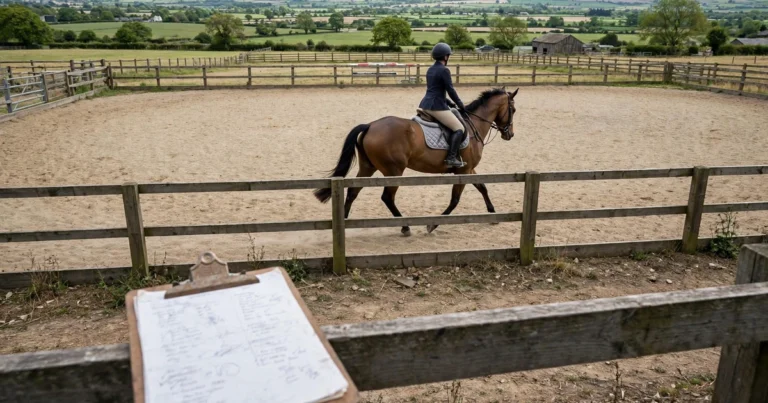
A rider beta program closes that gap: pre-production pads go on real horses for several weeks of regular work, riders file standardized feedback on fit, heat, wash and durability, and the design is revised before the bulk order commits the money. Typical practice, not a sponsored giveaway — the barn is the laboratory.
This guide covers how equestrian brands run saddle pad betas: the five stages from recruitment to sign-off, a 7-point testing checklist, the protocol terms that protect the design, and how rider notes become a factory-ready spec. Durations and program sizes are typical practice — confirm what fits your launch timeline.
Key takeaways
- A beta program is a structured field test: pre-production pads on real horses for a set period, with standardized feedback collected before bulk production.
- Five stages keep it disciplined: recruit riders, brief and baseline, run a several-week test, collect feedback, revise once, then sign off for production.
- The 7-point checklist covers fit and stability, wither and spine clearance, heat and sweat, binding durability, strap function, wash performance, and horse response.
- A written test protocol covers design ownership, confidentiality, sample return, photo rights, and rider safety terms — get it signed before pads ship.
- One revision round is the working discipline: aggregate feedback, separate defects from taste, update the tech pack, and re-test only what changed.
What is a saddle pad beta program?
A saddle pad beta program is a structured field test: a brand puts pre-production pads on real riders’ horses for a set period, collects standardized feedback, and revises the design before bulk production. It is not a sponsored-rider giveaway and not a photo shoot — it is product development with the barn as the laboratory.
The program exists because factory samples lie by omission. A sample proves the factory can make the design once, under supervision. It does not prove the binding survives repeated washes or the pad stays put on a round horse in August. Riders in regular work find all of that within weeks — while there is still time to fix it.
Brands that skip the beta pay for the learning later: in returns, in warranty claims, in the quiet death of a design that gets one bad season of reviews. A typical beta costs a handful of sample pads and a few weeks; a failed production run costs the whole order.
How does a beta program run, stage by stage?
Five stages, each with a clear output. Keep the program tight — a beta that drags on loses riders and momentum.
| Stage | Typical duration | What happens | Output |
|---|---|---|---|
| 1. Recruit | 1–2 weeks | Select a small panel of riders across disciplines and horse types; send the protocol for signature | Signed testers, sizes confirmed |
| 2. Brief and baseline | 1 week | Ship test pads with the feedback form; record each horse’s build, workload and current pad | Baseline sheet per horse |
| 3. Field test | 4–8 weeks | Riders use the pad in normal work; weekly short check-ins keep response rates up | Worn pads showing real use |
| 4. Feedback | 1–2 weeks | Collect the structured forms; follow up on vague answers while memories are fresh | Completed checklists |
| 5. Revise and sign off | 2–4 weeks | One revision round on the factory sample; re-test only what changed; lock the tech pack | Production-approved spec |
Recruitment deserves care because the tester pool decides what the beta can find. Mix disciplines — a dressage rider and a jumper stress different parts of a pad. Mix horse builds — a round pony and a narrow thoroughbred expose different fit issues. And include riders with different wash habits, since wash behavior is where binding and quilting failures hide.
Pay testers in product: they keep the test pad, and riders who file complete feedback on time get first pick of the production run. That single rule does more for response rates than any reminder schedule.
What should the 7-point testing checklist cover?
The checklist is the whole value of the program. Without it, feedback is a handful of text messages saying the pad is nice. The discipline mirrors what beta-testing practice recommends in any industry: specific questions tied to specific tasks, not open invitations to tell me what you think (LaunchBuff). Give every rider the same form, the same seven points, the same rating scale, so the answers compare across horses.
| # | Test point | What the rider records | Red flag |
|---|---|---|---|
| 1 | Fit and stability | Pad shifting during the ride — forward, back, or sideways — and at which gait it starts | Pad migrates in one session |
| 2 | Wither and spine clearance | Rub marks, dry spots or white hairs after work; pressure along the spine | Any rub after normal work |
| 3 | Heat and sweat | Sweat pattern under the pad vs the horse’s usual pad; heat felt on the hand after work | Traps more heat than the current pad |
| 4 | Binding and edge durability | Binding condition after each wash: rolling, fraying, stitch breaks; washes logged | Rolls or frays within the first wash cycles |
| 5 | Strap and keeper function | Billet straps and girth keepers: stretch, buckle slip, stitching at anchor points | Stretch or anchor stitch failure |
| 6 | Wash performance | After a set wash count (e.g. 10 and 20 cycles): shrinkage, fading, quilting puff, shape | Shrinkage, color loss, quilting collapse |
| 7 | Horse response | Girthiness, sensitivity when tacking up, reluctance under saddle vs the old pad | Horse less comfortable than before |
Point 7 is the one brands skip and regret. A pad can pass every construction check and still make a horse girthy — a slightly different seam placement, a stiffer binding edge. The horse is the most honest tester on the panel.
Ask riders to photograph two things mid-program: the pad on the horse after a hard session (sweat pattern, position) and the binding close-up at a stated wash count. Photos catch what tired riders forget to write.
What terms should the test protocol include?
The test protocol is a short written agreement signed before any pad ships. It protects the design and sets expectations. Typical practice, not legal advice — have the final version reviewed for your market.
Design ownership. The design, tech pack and any incorporated rider suggestions remain the brand’s property. This prevents a tester claiming a co-design credit later.
Confidentiality and no early posting. Testers agree not to photograph, post or discuss the unreleased design publicly until the launch date. Beta pads in the background of a show selfie have spoiled more than one launch.
Sample handling. State whether testers keep the pad, return it, or return it on request. A pad ridden for several weeks and washed repeatedly is the best physical record of the beta.
Feedback obligation and deadline. The pad is given in exchange for the completed checklist by a stated date. Miss it without communicating, and there is no next round.
Photo rights. The brand may use tester photos and quotes in marketing, with credit as agreed. Sort this out now, not when the launch campaign wants a great action shot.
Rider safety. Riders participate at their own risk, using their own tack and judgment; the brand is not liable for riding accidents during the test.
How do you turn rider feedback into a production spec?
Feedback arrives as fifteen different opinions. Sort it into three piles: defects, preferences, and noise. This is the same loop beta-testing practice recommends: prioritize by impact, reproduce and confirm the real issues, iterate only on those, and close the loop by telling testers what changed (Keploy’s beta-testing best practices).
Defects are findings that repeat across riders and horses — binding rolls on most pads, straps stretch on several jumpers’ pads. Defects change the spec, full stop. Preferences are split findings — half the riders love the thicker quilting, half find it bulky. Preferences get decided by the target customer, not by vote: if the line is a schooling pad, the schooling riders’ preference wins. Noise is the one-off: one unusual horse build, one rider with unusual wash habits. Note it, don’t redesign for it.
Then comes the discipline that makes betas work: one revision round. The factory makes one revised sample addressing the defect pile, and riders re-test only what changed. Brands that allow endless revision loops never launch; the beta’s job is to catch the failures that would kill the product, not to design by committee.
Every change goes into the tech pack with a date and a reason: binding changed from single-needle to double-needle, beta round 1, rolling observed mid-test. The final signed sample, the completed checklists and the revised tech pack together are the production sign-off package.
What specs should you confirm when requesting beta samples?
Beta samples are priced and scheduled differently from production orders. Confirm these before the run:
- Test-sample quantity and pricing terms — how many pads, at what unit basis
- Sizes and colorways covered in the test run
- Tech pack format for the revision round, and what counts as one revision
- Sample lead time per round, so the beta fits your launch calendar
- Support materials: can the factory supply the checklist format or labeled packaging?
- Transition terms: how the approved beta spec moves into production MOQ (50 pieces per color)
Frequently asked questions
Should testers be sponsored riders or everyday customers?
Everyday customers, mostly. Sponsored riders give polished feedback and great photos, but they ride one horse, in one discipline, with professional grooms doing the washing. Everyday riders across disciplines, horse builds and wash habits find the failures that matter for a production run. A couple of sponsored riders for launch content, alongside a panel of regular riders for testing, is a common mix.
What if the feedback contradicts itself?
Expect it — that is what the three piles are for. Contradictions usually mean the finding is a preference, not a defect, and preferences are decided by the target customer. When half the panel loves the foam and half hates it, the question is which half buys this product line.
How do you stop testers posting the design early?
The signed confidentiality term is the foundation, but practical measures do most of the work: ship test pads in unbranded packaging, ask testers to avoid photographing the pad at public shows, and set a clear date after which posting is welcome. Most leaks are careless, not malicious.
Can the factory run the beta program for me?
The factory can make the test samples, but it should not run the testing — the tester would report problems to the company that made the product. Keep recruitment, feedback collection and the defect-versus-preference calls in-house, and use the factory for turning the revised spec into samples.
How do beta programs work for a first product with no rider base?
Borrow one. Tack shops, trainers and riding schools all have rider networks and a reason to help — early access to the finished product and their name in the launch story. A first-time brand that partners with two or three friendly shops gets a better panel than a big brand mailing pads to strangers. The standard custom MOQ of 50 pieces per color still applies at production; the beta just makes sure those 50-per-color are worth ordering.
Send us your new design — sketches, tech pack, or just the concept — and we will make beta-run test samples in your sizes and colorways, with the 7-point checklist format included.
Sources & Further Reading
- How to Run a SaaS Beta Program That Gives You Real Feedback — LaunchBuff: structured beta discipline — specific tasks, specific questions, pattern-vs-outlier filtering, and closing the loop with testers.
- What Is Beta Testing? Process, Types, Benefits, and Best Practices — Keploy: the feedback loop — prioritize by impact, reproduce and confirm, iterate, and acknowledge testers.
- How to Brief a Factory on Custom Saddle Pads — cornovosaddlery.com/
- Pre-Shipment QC Checklist for Saddle Pads — cornovosaddlery.com/
- Launching a Private-Label Saddle Pad Line: Timeline — cornovosaddlery.com/
- How to Wash and Care for Saddle Pads — cornovosaddlery.com/
