Wool Felt vs Foam vs Gel Saddle Pad Inserts: A Buyer's Comparison
Published · Cornovo Saddlery
Consider a common scenario: a buyer specs the best shock-absorbing insert for a new private-label line, and the factory sends gel. The pads sell well at first — then summer arrives and riders report the pads feel hot and heavy, and the gel turns out to be overkill for flatwork school horses. The buyer had ordered the best shock absorber; the customers needed a balanced everyday insert. Reordering a lighter, cheaper insert fixed the complaints.
For most schooling lines, open-cell foam is the practical default: light, affordable, breathable and washable. Wool felt suits western and premium heritage lines where tradition sells. Gel is a specialist — its advantage shows in jumping and correction pads, where concentrated impact justifies its weight, heat retention and cost. The discipline should decide, not the marketing claim.
Key takeaways
- No insert leads in every condition. Gel tends to handle concentrated impact loads best but traps heat and adds weight; open-cell foam is the versatile, affordable default for schooling; wool felt brings natural breathability and a heritage story at higher cost and weight.
- Breathability and shock absorption trade against each other: the denser and more sealed an insert is, the more heat it tends to hold against the horse’s back in long, hot work.
- The discipline decides the insert: flatwork schools want breathable foam or felt, jumpers want gel or foam-gel hybrids in the impact zones, western riders expect felt, and endurance wants maximum ventilation with no gel at all.
- OEM hybrids — foam core with felt contact, or gel panels only in the impact zones — let a private label offer a differentiated range without the cost and weight of single-material construction.
- Built-in inserts are sealed into the pad at the factory; spec them like a permanent decision, because the rider cannot change them later. Standard custom MOQ is 50 pieces per color.
What is a saddle pad insert?
A saddle pad insert is the internal layer inside a quilted or constructed saddle pad that cushions between horse and saddle. Unlike a removable shim, it is built in at the factory — sealed between face fabric and lining. When a buyer evaluates how thick is this pad or how much shock does it absorb, they are evaluating the insert.
Inserts come as sheet material cut to the pad pattern — felt blankets, foam sheets, gel sheets or gels laminated to foam — then quilted or bonded into the pad. The insert material drives most of the pad’s performance, most of its weight and a large share of its cost, which is why spec’ing the insert correctly matters more than picking the face fabric color.
How do wool felt, foam and gel compare — and under what conditions?
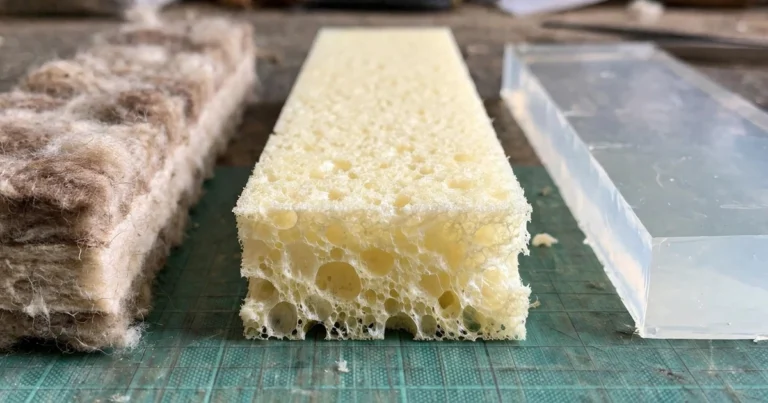
The honest comparison is conditional: each material’s strengths hold under particular conditions and fail outside them. Gel tends to handle concentrated impact loads best but traps heat and adds weight; open-cell foam is the versatile, affordable default; wool felt brings natural breathability and a heritage story at higher cost. The table below spells out the conditions.
| Feature | Wool felt | Foam (open-cell) | Gel |
|---|---|---|---|
| Shock absorption — and its limits | Distributes pressure through a dense fiber network; suits steady, distributed loads — less suited to sharp landing impact than gel | Moderate to good depending on density and thickness; quality foam recovers well, cheap foam packs down and loses its cushion | Tends to spread concentrated point loads best of the three — but can displace under pressure and create hard edges, and can rebound energy back rather than absorbing it (see the Iberosattel pad-science breakdown) |
| Breathability and heat | Wicks moisture naturally; a thick felt layer still holds heat in long, hot sessions — thin felt with a breathable face is the compromise | Open cells let air and moisture pass through; one of the better-ventilating inserts for hot-climate schooling | Poor — solid gel blocks airflow and traps heat against the skin; perforated gel models improve it somewhat, but the material itself remains a heat trap |
| Weight | Heavier than foam at equal thickness; felt thickness adds up in shipping | Lightest of the three — easy to handle, wash and ship | Heavy; riders notice it in hand, and it adds to freight cost per piece |
| Durability tendencies | Resists compression over time; pressed felt is noted for good compression rebound and longer life than some alternatives (Team Roping Journal) | Quality foam holds up; cheap foam packs down — density, not just thickness, is the spec that matters | Doesn’t compress, but sheet edges can crack with age; heavy when wet, so washing is a wipe-down job |
| Cost position | Mid to high — natural fiber pricing | Low to mid — the most economical insert | High — material plus lamination cost |
| Rider perception | Traditional, premium, natural | Modern, practical, everyday | High-tech, protective, specialist |
The pattern is conditional, not ranked: choose felt where natural comfort, tradition and breathability sell the pad; foam where everyday versatility, washability and value matter; gel where concentrated impact protection justifies its trade-offs. Most private-label lines should be built on foam, with felt and gel as specialist upgrades — that mirrors how riders actually buy.
Which insert suits which discipline?
The discipline sets the impact level, the session length and the rider’s priorities, and the insert should follow. Flatwork and dressage mean long sessions and sweat: breathable foam or felt keeps the horse comfortable. Jumping means landing impact: gel or foam-gel hybrids earn their weight where concentrated force plays to gel’s strength. Endurance, hours in heat, rules gel out.
Western riding has its own logic: wool felt is the traditional insert and riders expect it — a western pad line without a felt option will look incomplete on the wall, whatever foam can do technically. Wool’s moisture-wicking and the way felt conforms to the horse’s back are the documented reasons western riders stay loyal to it (Team Roping Journal).
Trail riding favors light weight and washability, which points to foam. Young-horse and training programs are the hidden volume buyer: trainers go through pads fast and replace on cost, so a durable, affordable foam pad in school colorways is the workhorse SKU. Spec it washable and quick-drying, and it becomes a reorder line.
Can inserts be combined in OEM programs?
Yes. Layering different inserts in one pad is standard OEM work. Common hybrids: foam core with felt on the contact side; foam core with gel panels in the impact zones; felt base with foam top for a western look at lighter weight. Hybrids cost more in lamination and cutting, but give sales copy a claim the rider can feel.
Hybrid construction costs more than single-material pads — extra lamination and cutting steps — but it gives the sales copy a real story: felt contact, foam core or gel impact zones is a claim the rider can feel, not just read. Ask the factory for a cutaway sample of any hybrid: the layer order and bonding quality are visible at a glance, and a photo of that cutaway is the single best product-page image a retailer can have.
One caution: hybrids complicate care labeling and QC. Spec the wash instructions for the most delicate layer, and have the factory confirm that the lamination survives the wash cycles the care label promises — delamination is the classic hybrid defect, and it is invisible until a few months in.
What private-label talking points sell each insert?
Riders buy inserts by feel and by story, and each material has a natural sales line. For wool felt: natural fiber cushioning that breathes and molds to your horse. For foam: lightweight everyday protection that washes and dries fast. For gel: targeted impact protection for jumping — and be honest that it is a specialist pad.
The strongest retailer story is the range story, not the single pad: a schooling foam pad, a comfort felt pad and a performance gel pad in matching colorways. That gives the shop wall a good-better-best ladder, and riders who buy the schooling pad often move up the ladder later. Print the insert type on the hang tag — open-cell foam insert — because riders compare inserts across brands and the tag is where the comparison happens.
At the standard custom MOQ of 50 pieces per color, a three-insert ladder in two colorways is a realistic first order — treat it as a starting assortment and rebalance on sell-through. The factory runs the same shell with three insert specs, so the setup stays contained while the line looks complete on the wall.
What specs should you confirm when requesting a quote?
An insert is a sealed, permanent decision — the rider cannot swap it later — so confirm the engineering before bulk, not after:
- Insert material, density and thickness together (thickness alone does not equal protection)
- For foam: open-cell vs closed-cell, density range offered, and compression behavior after repeated wash cycles
- For felt: fiber content, density, thickness, and whether it is pre-shrunk with tested dimensional stability
- For gel: sheet thickness, perforation options, edge finishing, and lamination method
- For hybrids: full layer order, bonding method, and confirmation that the lamination survives the care-label wash cycles
- Wash and care instructions matched to the most delicate layer
- Lead time: confirmed per order — treat any day count as a planning estimate until the factory confirms against its schedule
Frequently asked questions
Is gel always better at shock absorption than foam?
Not always — better depends on the load. For sharp, concentrated impact such as a landing, gel tends to spread point loads better than foam of equal thickness, which is how gel-pad makers describe their own technology (AQHA). But gel can displace and create new pressure edges, rebound energy back into the horse, and trap heat — all documented trade-offs (Iberosattel). Gel’s advantage is narrow and real, which is why it belongs in jumping and correction pads rather than everyday schooling pads.
Do wool felt inserts shrink in the wash?
They can, if the felt isn’t pre-shrunk or the care label is ignored. Ask the factory whether the felt is pre-shrunk and what dimensional stability the wash test showed, then put the tested care instructions — typically cool wash, no hot dryer — on the label. A felt pad with honest care copy gets fewer returns than one that promises machine-proof convenience.
How thick should the insert be?
It depends on the pad’s job. As a reference point, one established pad maker suggests a ¾-inch pad as the most universal thickness, a ½-inch pad where the saddle already fits the horse perfectly, and a thicker 1-inch pad for extended riding or heavy use such as roping (AQHA). Thickness alone doesn’t equal protection — density and material matter as much. Spec thickness, density and material together on the tech pack, and judge samples by riding feel, not by pressing them with your thumb.
Can a foam insert pad be a premium product?
Yes. Premium is about the whole construction — high-density open-cell foam, quality face fabric, clean quilting, strong binding — not about the insert material alone. Some of the best-selling dressage pads on the market are foam-core; the riders pay for fit, finish and brand trust. Don’t let the insert material cap your price tier.
What’s the minimum order for a custom insert program?
The standard MOQ is 50 pieces per color. For a hybrid or layered insert, expect the factory to confirm setup feasibility on the first order — lamination and multi-material cutting sometimes need a trial run. Send the layer stack you want (for example, felt contact + foam core + gel front panels) and ask for a cutaway sample before approving bulk.
Tell us which insert story fits your line — everyday foam, natural felt, performance gel, or a hybrid stack — and we’ll build the pad around it: insert spec, face fabric, quilting and binding in your colorways at 50 pieces per color. Send an RFQ with your target disciplines and we’ll return insert samples and a cutaway construction sample with the quote.
Sources & Further Reading
- Saddle Pad Science: Memory Foam vs. Gel vs. Sheepskin — Iberosattel: biomechanical breakdown of memory foam (bottoming out, heat trapping), gel (edging pressure points, rebound, heat trapping, weight) and wool (breathability, pressure distribution).
- Correct Length and Thickness of a Saddle Pad for Your Horse — American Quarter Horse Association: thickness guidance by use case and gel-technology shock-absorption description.
- The Science of Western Saddle Pads Explained — Team Roping Journal: wool’s moisture wicking and conformity, pressed felt’s compression rebound and longer life, synthetics’ shock absorption and breathability.
- Saddle Pad Thickness and Fill Guide: Wool Felt vs Foam vs Gel — cornovosaddlery.com/
- Wool vs Synthetic Saddle Pads: Fills Compared — cornovosaddlery.com/
- Breathable Saddle Pads for Hot Climates — cornovosaddlery.com/
- How to Brief a Factory on Custom Saddle Pads — cornovosaddlery.com/
