Why Sheepskin Saddle Pads Cost More: A Wholesale Cost Breakdown
Published · Cornovo Saddlery
Consider a common scenario: a distributor compares two quotes for the same pad silhouette — one quilted cotton, one sheepskin-lined — and the sheepskin version lands at multiples of the cotton price. The instinct is to push back on the factory’s margin. But the margin is usually the smallest part of the gap: most of the difference is upstream, in the skin, the selection, and the tanning — costs the factory cannot negotiate away either.
The short answer: Sheepskin pads cost more because the raw material is a graded natural product — one sheep yields one skin, density and wool quality vary skin to skin, tanning is chemical- and labor-intensive, and cutting around natural defects wastes material. The wholesale price is mostly the cost of getting a usable, uniform panel, not the sewing.
This guide is the cost anatomy behind the product: our sheepskin half pad guide covers what to specify (wool density, backing, stitching), and our distributor pricing guide covers how margins stack from factory cost to shelf — this one explains why the factory cost itself starts where it does (boundary note: 046 is the margin math across the chain; this guide is the sheepskin-specific cost structure upstream of it).
Key takeaways
- The price gap sits upstream of sewing: raw-skin grading, tanning, density selection, and cutting yield — not factory margin — explain most of the difference.
- One sheep yields one skin, and skins are graded: dense, even wool costs more because fewer skins qualify — one sheepskin maker states that only a small fraction of its skins meet its top grade.
- Medical grade is a traditional selection term for dense, shorn skins — not a certified device grade — so treat it as a maker’s grading claim, not a standard.
- Tanning (including chrome-free processes) and washability preparation are real processing costs; certifications like RWS add an audited layer only where the factory actually holds them.
- MOQ 50 pieces per color.
Where does the money actually go — the cost anatomy?
Direct answer: The wholesale cost of a sheepskin pad breaks into seven blocks: raw-skin purchase and grading, tanning, wool preparation (washing, shearing to pile height), density selection, cutting yield loss, sewing, and inspection. The first five are the ones that make sheepskin multiples of a synthetic pad — and the factory controls only some of them.
| Cost block | Why it costs — supplier experience |
|---|---|
| Raw-skin purchase | Skins are bought per piece, not per meter: one sheep yields one skin, and raw prices move with slaughter seasonality, skin size, and wool quality — a market research firm’s sheepskin cost-driver list names exactly these three plus processing chemicals, labor, and energy as the moving parts. (IndexBox — Kazakhstan Sheepskin and Lambskin Market Report) The factory is a price taker here, not a price maker. |
| Grading and selection | Not every skin suits a saddle pad: density, wool evenness, skin thickness, and defect count sort skins into grades, and the top grades are a small share of any lot. One sheepskin maker states that only about one percent of its skins meet its medical grade selection — treat that as one maker’s claim, but the shape of it is universal: tight selection means paying for the skins you reject too. (Noryageur — Best Sheepskin Rug guide) |
| Tanning | The skin side must be tanned to stay supple and odor-free through washing; chrome-free tanning is one documented route, and the washability of the finished pelt is part of what you are paying for. A sheepskin maker’s product copy describes its pelts as tanned chrome-free with a supple natural leather back — the leather back is a processed product, not a raw one. (Desert Breeze — Medical Sheepskin Underlay) |
| Wool preparation | Washing, drying, and shearing the wool to a specified pile height are separate operations: medical style skins are commonly shorn to about an inch, and that shearing is a deliberate, costed step — not the wool’s natural state. (Desert Breeze describes its grade as shorn to 1 inch; Noryageur cites 1 1/4 inch — each a maker’s own spec, not a standard.) |
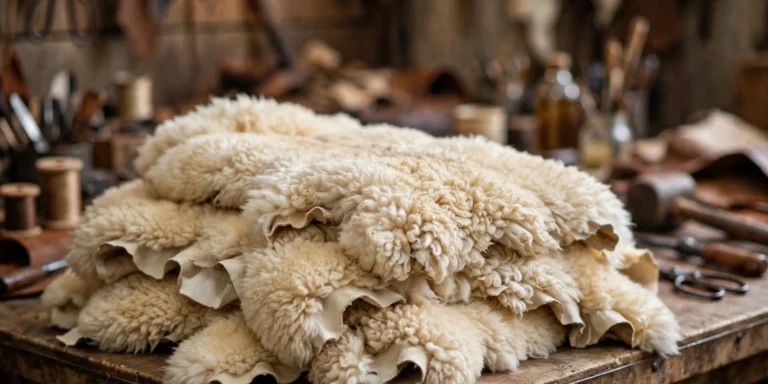
| Cutting yield loss | A pelt is an irregular natural shape with thin edges and defect zones; cutting pad panels from it wastes more material than cutting from a fabric roll. Yield — the share of the skin that becomes product — is the quiet cost multiplier, and it falls further when the buyer specifies defect-free, even-density panels. |
| Sewing and assembly | Sewing sheepskin is slower than sewing quilted cotton: thick pile, stretchy skin backs, and binding over uneven edges all cost machine time. This block is real but smaller than buyers assume — the upstream blocks dominate. |
| Inspection and sorting | Because no two skins match exactly, finished pads need per-piece color and density matching within a set — labor that a uniform synthetic line does not require. Natural variance is managed by human eyes, and that is a line item. |
Why is the raw skin itself the price — what is the factory actually buying?
Direct answer: The factory is buying a natural, seasonal, graded raw material sold per piece: skin size, wool quality, and slaughter season all move the price, and the tannery’s chemicals, labor, and energy sit on top. When a buyer asks why can’t this be cheaper, this block is the answer — a commodity the factory purchases, not a cost it sets.
The per-piece nature of the purchase is the key difference from textiles. Fabric is bought by the meter at a known width; a skin is bought as one irregular unit whose usable area is unknown until it is graded. That is why sheepskin quotes are more volatile than cotton-pad quotes across seasons — the IndexBox cost-driver list above names slaughter seasonality explicitly — and why a factory that quotes sheepskin firmly for a long validity period is either carrying inventory risk or padding the quote. Neither is free.
There is also a grade ladder inside the raw purchase that buyers rarely see: lambskin, prized for softness, commands a premium over standard sheepskin within the same market. If your brief does not specify the skin grade, the factory’s quote is pricing a grade you have not chosen — ask which one.
Why does density and selection cost money — what is medical grade really?
Direct answer: Density is the property buyers pay for — more fibers per area means more cushioning and more even wear — and dense, even skins are a selected minority of every lot. Medical grade is the trade’s traditional name for dense, shorn skins; it is not a certified medical-device grade, so read it as a maker’s grading claim.
The honest statement of the term comes from a sheepskin maker itself: ‘Medical sheepskin’ is the traditional name for this dense, shorn grade. It is a natural comfort aid, not a certified medical device. (Desert Breeze — Medical Sheepskin Underlay) That sentence is worth keeping in your RFQ folder, because it draws the exact line a buyer needs: the grade describes selection (dense, shorn), and it promises nothing regulatory.
Selection intensity is where the cost lives. Grading out the thin, uneven, or defective skins means the factory pays for skins it cannot use in your order — the cost of the rejected skins is carried by the accepted ones. When a maker says a small fraction of skins make its top selection, the wholesale translation is simple: the tighter your density and uniformity spec, the more skins the factory buys per shippable pad. Loosen the spec and the price moves; tighten it and it moves the other way. There is no free tightness.
Why is tanning the expensive middle — and why does washability cost extra?
Direct answer: Tanning converts a perishable skin into a stable, supple, odor-free material that survives repeated washing — and the washability buyers expect is a processed property, not a natural one. Chrome-free tanning, sanitizing treatments, and wash-stable finishing are the costed steps between the raw skin and the pad panel.
The product evidence is on any honest sheepskin listing: genuine single pelt plus tanned chrome-free plus odor free plus sanitizing treatment, in the same breath. (Desert Breeze — Medical Sheepskin Underlay) Each of those phrases is a process with a cost. A pad that must be machine-washed by a rider — the normal expectation for anything worn against a sweating horse — needs a tanning and finishing route specified for wash stability; the factory that cannot describe its wash-stable process in writing is quoting you a rug skin, not a pad skin.
This is also where the environmental-compliance cost sits: tanning is chemically intensive, and environmental compliance costs for tanneries are rising in producing regions (again per the IndexBox cost-driver analysis). Those costs pass through the skin price whether or not they appear as a line item — ask how the factory’s tannery handles them only if you need the story for your own marketing; for the quote, they are already in the number.
Why do natural shapes waste material — the cutting-yield problem?
Direct answer: A pelt is an irregular natural shape — narrow at the neck, thin at the edges, with defect zones scattered across it — while a pad panel is a clean rectangle or contoured shape. Every panel cut leaves unusable offcut, and the stricter the buyer’s density and defect spec, the more of each skin stays on the cutting table.
Compare the two purchasing models: a synthetic pad line buys fabric by the roll and nests panels at high utilization; a sheepskin line buys irregular units and cuts around nature. The yield gap between those two models is structural — it does not shrink with order volume the way a fabric price breaks does, because each additional skin brings its own irregular shape and defect map. This is the cost block buyers most consistently underestimate, and the one where can’t you just cut more efficiently has the shortest answer: the factory already does; the shape is the shape.
Color adds a second yield pressure buyers forget: dyeing natural wool to fashion colorways is its own operation with its own evenness risk, and dark or saturated colors on wool ask for more dye, more wash-off control, and tighter lot discipline. A natural-color sheepskin program is the cheapest version of the material; every fashion color is a processing surcharge on top of the skin.
What about certifications — is RWS a cost layer or just a label?
Direct answer: Certifications like the Responsible Wool Standard add a real, audited cost layer — farm audits, chain-of-custody documentation, and certified-only material flows — but only where the factory actually holds the scope certificate. Never pay a certification premium on a claim; pay it on a certificate you have seen.
What the certification actually requires is worth knowing before you price it: RWS is an independent, voluntary certification developed by Textile Exchange covering animal welfare (the Five Freedoms), progressive land management, and independent third-party audits at every stage of the supply chain. (Merino Kids — RWS Certified NZ Merino Wool, citing Textile Exchange) Every one of those requirements — audits, segregated certified material, documentation — is a cost someone bears, which is why certified wool trades above uncertified wool of the same physical grade.
The buying rule is mechanical: if the brief requires RWS (or any named certification), the factory must produce its current scope certificate before the premium is discussed; if the brief does not require it, do not accept a certified price for an uncertified product. And keep the certification question separate from the material question — a non-certified dense skin and a certified one can be physically identical; the premium buys the audit trail, not thicker wool.
How should you read a sheepskin pad quote — what questions unlock it?
Direct answer: Read the quote as a grade-and-yield story, not a sewing story: ask which skin grade is priced, what density spec it carries, how wash stability is achieved, and what the cutting yield assumption is. A factory that answers those four precisely is quoting the real cost; one that cannot is quoting a guess with margin hidden inside it.
The four questions, and what good answers sound like: which grade — the factory names its grade and the density/wool-length/defect allowances behind it, not good quality. What density spec — the pile height and evenness requirement in writing, because density is the property the selection cost attaches to. Wash stability how — the tanning route and the wash test the finished pad is specified against, since washability is processed, not natural. Yield basis — whether the quote assumes standard panel nesting or your specific defect-free requirement, because tight specs cut yield.
One more quote-reading discipline: compare sheepskin quotes per skin grade, not per pad. Two factories quoting sheepskin half pad can be pricing different grades, different densities, and different tanning routes — the cheaper quote is often the thinner skin. Our manufacturer vs distributor guide covers the broader route decision; inside the sheepskin lane, grade is the variable that moves the number.
What specs should you confirm when requesting a quote?
Direct answer: Confirm the skin grade and density spec, the tanning route and wash stability, the pile height, color and dyeing terms, natural-variance acceptance, and certification status — in writing, against a physical skin sample. Seven confirmations for a material where every skin is different.
- Skin grade — the factory’s named grade with its density, wool-length, and defect allowances; confirm the quote is priced on that grade, not a vaguer one
- Density and pile spec — pile height range and evenness requirement; how density is verified at incoming inspection (visual grading, sample panel, or measured)
- Tanning route — chrome-free or otherwise, stated; the wash-stability test the finished pad is specified against (temperature, cycles, and what pass means)
- Color terms — natural vs dyed; if dyed, the dye method, wash-off control, and dye-lot discipline across the order (natural variance plus dye variance compounds)
- Variance acceptance — the written tolerance for skin-to-skin density and shade variation within one order, so they don’t match has a contractual answer
- Certification status — scope certificate seen and current before any certified premium is discussed; which product lines the certificate covers
- MOQ — 50 pieces per color is our factory standard; confirm how colorways count when natural and dyed skins run as separate material streams
Key takeaways
- The wholesale price is a grade-and-yield story: raw-skin purchase, grading, tanning, wool preparation, and cutting yield explain the gap — sewing is the smaller block.
- Density is what you pay for and selection is what it costs: tight specs mean the factory buys more skins per shippable pad, and there is no free tightness.
- Medical grade is a traditional selection term for dense, shorn skins — a maker’s grading claim, not a certified standard; ask what it means at your factory.
- Washability is processed, not natural: the tanning route and wash-stability spec are costed steps — confirm them in writing before the order.
- Certification premiums buy the audit trail, not thicker wool: see the scope certificate before discussing the premium. MOQ 50 pieces per color.
Frequently asked questions
Is a more expensive sheepskin pad always better wool?
Not necessarily — price reflects grade, density spec, tanning route, order volume, and the factory’s yield assumptions together. Two pads can carry the same price with different wool: one dense skin simply cut, one thinner skin expensively finished. Compare the grade and density spec in writing, not the price tag.
Can the cost come down without switching to faux fur?
Conditionally: loosening the density or uniformity spec, accepting natural colorways instead of dyed ones, and consolidating colorways to improve cutting and dyeing efficiency all move the number — each is a trade against the product story. The material-swap route is the bigger step: our vegan and faux-fur guide covers the animal-free program as the alternative lane.
Does medical grade on a saddle pad mean anything regulated?
No — as a sheepskin maker states plainly, it is the traditional name for a dense, shorn grade and not a certified medical device. Treat it as a grading claim: ask the factory what density, pile height, and selection criteria sit behind the word on your quote.
Why do dyed sheepskin colorways cost more than natural?
Dyeing natural wool is a separate operation — dye, wash-off control, and lot discipline — layered on top of the skin cost, with evenness risk the factory prices in. Natural colorways skip that operation entirely. If the program needs fashion colors, consolidate them: fewer dye lots mean better lot discipline and better pricing.
Why can’t the factory just reorder the same skins next season?
Because skins are a natural harvest, not a manufactured input: each season’s lot brings different density, wool length, and shade. Repeat orders match to the grade spec, not to last season’s skins — which is why the grade definition in writing matters more than any sample from a previous run.
Quoting a sheepskin program and want the grade behind the number? Send us your target density, pile, and colorways — we quote against a named skin grade with the tanning route in writing, with free samples before bulk. MOQ 50 pieces per color.
Sources & Further Reading
- Desert Breeze — Medical Sheepskin Underlay: medical sheepskin as the traditional name for a dense, shorn grade — a natural comfort aid, not a certified medical device; shorn to 1 inch; chrome-free tanned; genuine single pelt.
- Noryageur — Best Sheepskin Rug guide: top-grade selection intensity (about one percent of skins, per this maker); medical skins tanned and shorn to 1 1/4 inch.
- IndexBox — Kazakhstan Sheepskin and Lambskin Market Report: raw-skin cost drivers (size, wool quality, slaughter seasonality); processing chemicals, labor, energy; finished goods at multiples of raw; rising environmental-compliance costs.
- Merino Kids — RWS Certified NZ Merino Wool: RWS as independent voluntary Textile Exchange certification — Five Freedoms, progressive land management, third-party audits at every supply-chain stage (cited to Textile Exchange).
- Sheepskin Half Pads: A Buyer’s Guide — the spec companion: wool density, backing, and stitching to write into the RFQ.
- Sheepskin Girth Covers: A Distributor’s Buying Guide — the same material expertise applied to girth sleeves.
- How Distributors Price Saddle Pads — margin tiers from factory cost to shelf (boundary: that guide is the chain math; this one is the upstream cost).
- Vegan & Faux-Fur Saddle Pads: A Wholesale Guide — the animal-free alternative lane (same-batch companion piece).
