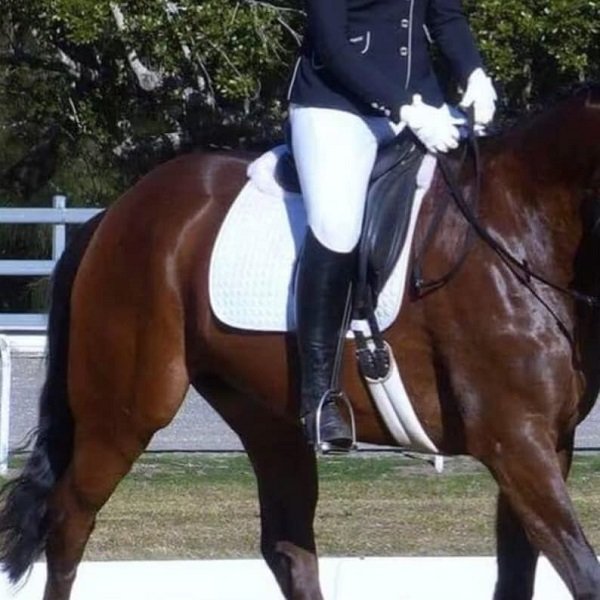
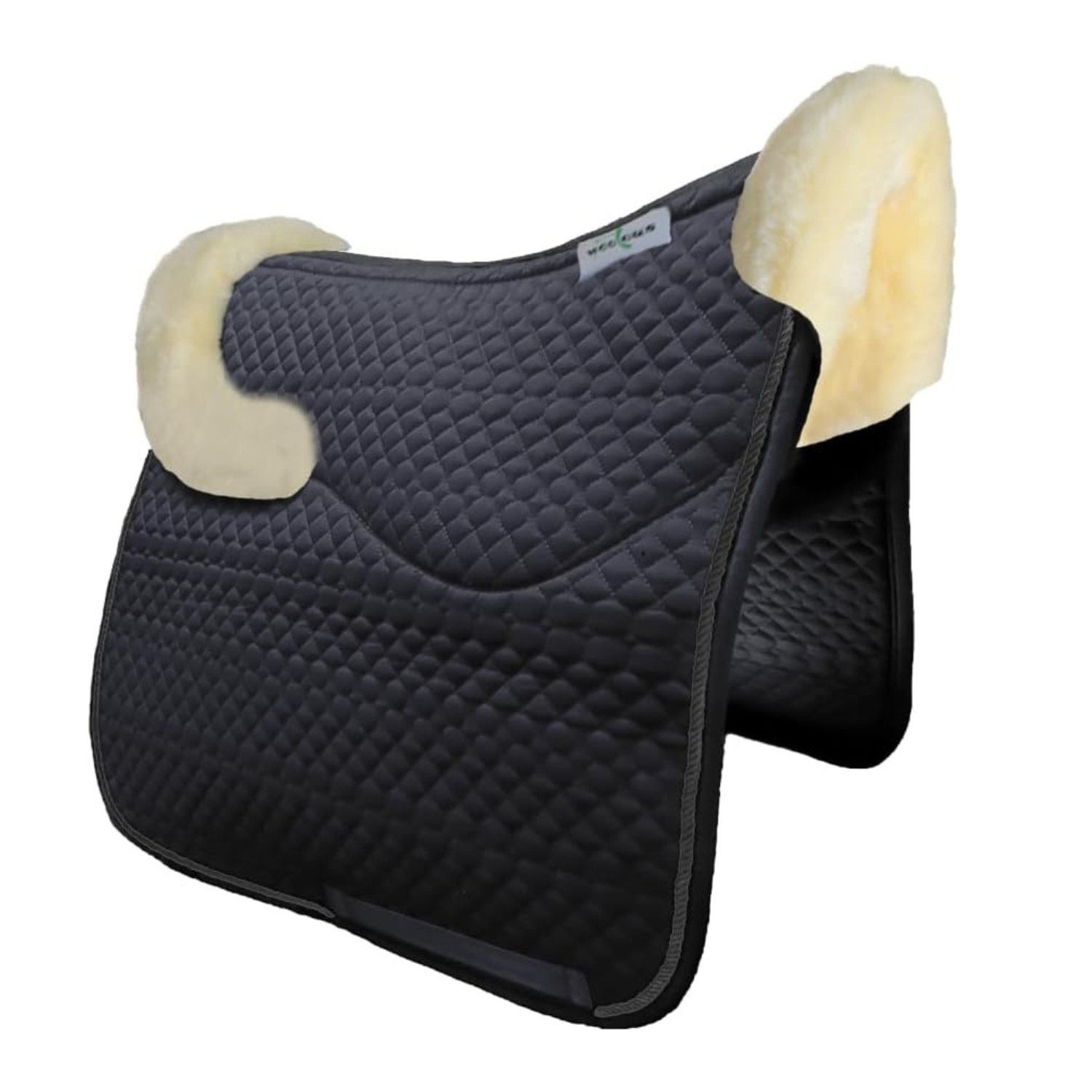
Consider a common scenario: a distributor with a successful private-label saddle pad line starts hearing the same request from retailers — \can you do the bridle in our navy, to match?\ Leather goods feel like a different trade, so the requests get politely declined. Over the following seasons, those retailers fill the gap with another supplier\’s pad-and-bridle sets, and the distributor\’s pads end up competing on price alone.
Bridles, reins, and halters are the natural leather-goods extension for distributors already selling saddle pads: same customer, same disciplines, same colorway and branding logic. In short: open your assortment with English snaffle bridles, western headstalls, and a bitless option; specify the leather grade, tannage, and thickness — not just \leather\ — on every PO; size by cob/horse/oversize against a physical sample on a real horse head; and plan leather colorways alongside your pad colorways so dye lots, piping, and embroidery do double duty. This horse bridles wholesale guide walks through each of those decisions.
Key takeaways
- Open the range with three bridle families — English snaffle bridles, western headstalls, and bitless/sidepull options — which cover the disciplines your pad customers already ride.
- Leather grade terms describe which hide layer you\’re getting and how much it has been altered — they are not an automatic quality ranking, so specify grade, tannage, and thickness on the PO.
- Stitching density and hardware quality carry the load — spec them explicitly, because these are where bridle failures and returns concentrate.
- Bridle sizing runs cob/horse/oversize by convention — always verify the factory\’s centimeter measurements against a physical sample fitted on a real horse head.
- Coordinated pad-and-bridle colorways are one of the strongest margin mechanics we see in private label — plan leather and textile colors at the same design stage.
What is a bridle, and which types should distributors stock first?
A bridle is the headgear used to control and communicate with the horse — headpiece, browband, noseband, cheekpieces, and reins working together around the horse\’s head. For distributors, the buying discipline centers on leather grade, stitching, hardware, and fit consistency across sizes, since a bridle that breaks or fits poorly is a safety issue, not just a cosmetic one. Three families cover most pad customers:
| Type | Discipline | Key features buyers check | Typical assortment role |
|---|---|---|---|
| English snaffle bridle | Dressage, jumping, eventing, schooling | Padded headpiece and noseband, stainless hardware, rein style (rubber, laced, plain) | Usually the highest-volume bridle line in mixed English accounts |
| Western headstall | Western riding, ranch, trail | Browband vs one-ear vs slip-ear styles, heavier leather, buckle vs snap ends | Core in western-riding markets; test before deepening |
| Bitless bridle / sidepull | Training, trail, leisure | Noseband padding, adjustment range | Niche but growing — a small test quantity tells you if your accounts want it |
| Double bridle | Advanced dressage | Finer leather, precise stitching | Premium tier only; small volume, list it rather than stocking deep |
Alongside bridles, plan for the two companion products every bridle program pulls along: reins (sold separately in English riding, often included with western headstalls — confirm the convention per product on the PO) and halters (nylon, rope, and leather, for handling and turnout). Halters typically carry the lowest unit price of the three and, in our supplier experience, often turn fastest in shops with a strong schooling or turnout customer base — but show-focused accounts may see bridles lead, so read your own sell-through rather than assuming the mix.
What do leather grades actually tell buyers?
Leather grade terms describe which layer of the hide you are getting and how much its surface has been altered — not an automatic quality ranking. As one leather supplier\’s guide puts it, these terms \simply let you know what layer of the hide you are buying, and whether it has been altered in any way,\ and low-grade hides can carry the same \top grain\ label as good ones. That means two quotes both saying \leather bridle\ can describe entirely different materials:
| Grade term | What it means | Where it typically fits | Watch out for |
|---|---|---|---|
| Full-grain | The hide\’s original grain surface, unaltered | Premium private labels where natural character and aging matter | Natural marks are part of the material — agree with the factory on what is acceptable |
| Top-grain (natural) | Top layer intact, grain not cut away, not altered | High-quality everyday bridles where uniformity matters | Terminology varies between tanneries — ask exactly what the tannery means by it |
| Corrected-grain | Surface sanded, buffed, or embossed for uniformity | Programs where piece-to-piece consistency matters more than patina | Won\’t develop the same character with age; check the finish for cracking at flex points |
| Leather-look synthetics (biothane, beta) | Polymer webbing with a leather look | Schooling, turnout, and wet climates — waterproof, wipe-clean, colorfast | Confirm hardware adhesion and heat/UV behavior against the factory\’s spec, not the marketing |
Put the grade, tannage, and thickness range on the purchase order for each component — cheekpieces and reins are typically thinner than headpieces and nosebands, and bridle leather is commonly specified in millimeters. \Genuine leather\ on a quote tells you nothing; ask for the grade, the tannage, and the thickness, and check the pre-production sample against all three.
How do bridle and halter sizing work?
Bridles size by convention — cob, horse (full), and oversize — rather than by head measurement, and one factory\’s \horse\ can be another\’s \oversize.\ The fix is the same as with saddle pads: get the factory\’s size chart in centimeters (browband length, cheekpiece adjustment range, noseband circumference per size) and verify it against a physical bridle fitted on a real horse head, not against a chart alone. The labels map roughly like this:
| Size label | Typical fit | Buyer notes |
|---|---|---|
| Cob | Large ponies, small horses, Arabians | Essential where your accounts serve pony-heavy markets |
| Horse / Full | Average 15.2–16.2 hh riding horses | Usually the deepest size in a first assortment — deepen or trim by reorder data |
| Oversize | 17 hh+, warmbloods, draft crosses | Required for dressage and jumping accounts; a small quantity avoids losing the sale |
Halters size similarly (small/average/large or cob/full), with the added check of throatlatch and noseband adjustment range — a halter that only fits at its last hole is a halter that gets returned. Reins size by length (commonly 54 inches for English; western split reins run longer) — confirm the length convention for each discipline on the PO.
What should buyers inspect before shipment?
Bridle defects concentrate in stitching and hardware — the two components that carry load. Work through this list piece by piece on pre-shipment samples:
- Stitching density and edge finishing. Check stitches per inch on cheekpieces, nosebands, and rein ends — sparse or uneven stitching is the first failure point. Edges should be dyed, burnished, or painted cleanly; raw cut edges fray and absorb water.
- Hardware quality. Buckles, keepers, bit hangers, and snap ends: check plating consistency, smooth buckle action, and keeper fit. Rust-prone or sharp-edged hardware becomes a safety complaint, not a cosmetic one.
- Hole punching. Adjustment holes must be cleanly punched, evenly spaced, and reinforced — torn or ragged holes elongate under load and the bridle stops adjusting.
- Leather consistency. Check color match across the pieces of one bridle (headpiece, noseband, and reins from the same hide batch) and flex for cracking at stress folds. Dry, cracked leather on arrival signals poor conditioning or old stock.
- Symmetry. Lay cheekpieces and reins flat — pairs must match in length and hole placement. Asymmetric reins are immediately visible to the rider.
- Smell and finish. A harsh chemical tanning odor that doesn\’t air out in 48 hours signals low-grade processing; surface dye should not transfer to a white-cloth rub test.
How do bridles pair with a saddle pad line?
The same colorway logic that sells pad-and-boot sets applies to leather goods: a retailer\’s navy pad program becomes a navy bridle, navy reins, and navy halter program, all carrying the same custom piping and embroidered logo. Plan the leather colorways alongside the textile colorways at the design stage — dye lots and trim programs then serve both lines, and the embroidery digitizing investment does double duty.
Practical bundling moves: offer bridle-and-pad sets in matching colorways; align the bridle launch with the pad colorway refresh so retailers merchandise them together; and use halters as the low-price entry point — a private-label halter program at 50 pieces per color lets retailers test your leather quality before committing to bridles. The factory economics help: one colorway program across textiles and leather goods reaches shared trim minimums (piping cord, thread) faster than either line alone.
What specs should I confirm when requesting a quote?
- Leather grade, tannage, and thickness range per component (cheekpieces, reins, headpiece, noseband)
- Hardware material, plating, and buckle/keeper types — plus the rein convention (included or sold separately) per discipline
- Stitch spec and edge-finishing method on load-bearing straps
- Size chart in centimeters per size, and the rein length convention per discipline
- Colorway and piping plan shared with the pad program — and whether one dye lot can serve both
- MOQ per color, lead-time band, and packing per unit (confirm per order)
Frequently asked questions
Which bridles sell in the highest volume for distributors?
In horse bridles wholesale, English snaffle bridles for schooling and jumping usually move fastest in mixed English accounts, followed by western headstalls in western-riding markets. Halters typically outsell both on unit volume — lower price and faster replacement — but the mix varies by account type, so read your own sell-through.
What leather grade should a mid-market private label specify?
It depends on what the program optimizes for: corrected-grain gives piece-to-piece consistency at a workable price, natural top-grain or full-grain suits programs where character and aging matter, and biothane or beta synthetics fit schooling and wet-climate lines. Whatever you choose, specify grade, tannage, and thickness on the PO — the grade term alone doesn\’t guarantee quality.
Are reins included with bridles?
It depends on the discipline convention: English bridles are commonly sold without reins (reins are a separate purchase), while western headstalls often include them. Confirm the convention per product on the purchase order so retail pricing and packing match customer expectations.
What is the most important quality check on bridles?
Stitching and hardware. Stitch density on load-bearing straps, clean hole punching, and buckle and keeper quality drive more field failures than the leather itself. Inspect these piece by piece on pre-shipment samples.
Can bridles be made in the same colors as our saddle pads?
Yes — coordinated pad-and-bridle colorways with matching piping are among the strongest margin moves we see in equestrian private label. Plan leather colors alongside textile colorways at the design stage so dye lots and trim programs serve both lines.
Sources & Further Reading
- The Leather Guy, \Leather 101: Top Grain Vs. Full Grain\ (external): what grade terms actually describe — hide layer and alteration, not an automatic quality ranking.
- Saddle pad inventory planning (internal): the colorway and reorder discipline to apply to bridle assortments too.
- Pre-shipment saddle pad QC checklist (internal): the inspection discipline to carry over to bridle shipments.
- Saddle pad custom branding: embroidery, piping and logo options (internal): run one embroidery and piping program across pads and bridles.
- Horse boots and leg protection distributors guide (internal): the other natural leather-and-textile extension for pad distributors.
Adding leather goods to your equestrian line? We manufacture bridles, reins, and halters in coordinated colorways with our saddle pad programs — 50 pieces per color, with leather grade, tannage, thickness, and hardware specs confirmed on pre-production samples. Send your target styles and quantities for a quotation.